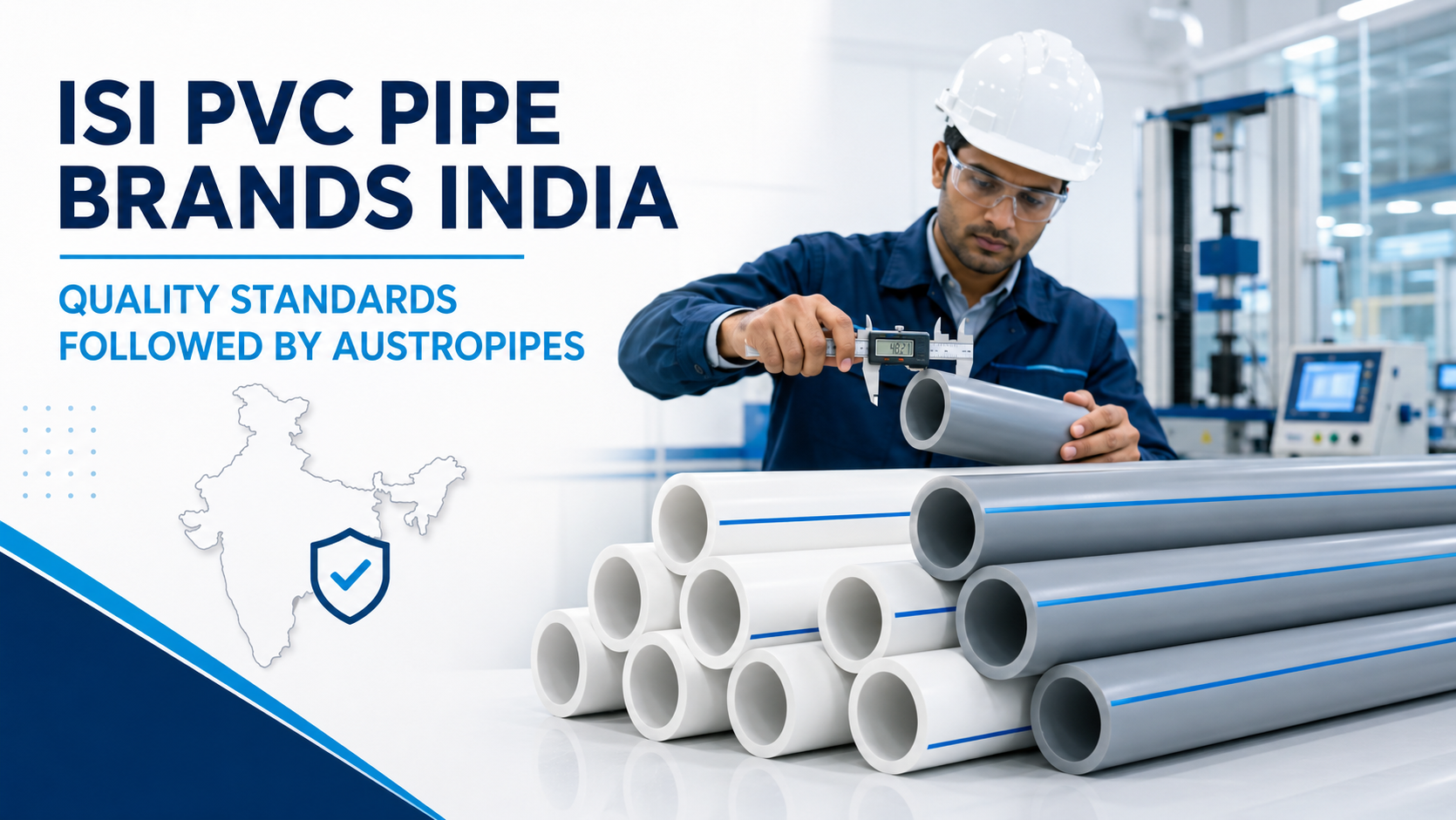
ISI PVC Pipe Brands India: Quality Standards Followed by Austropipes
By@seo
Selecting PVC pipes for construction and electrical installations is not simply about comparing prices or choosing a familiar name. Buyers need to consider product specifications, intended application, manufacturing consistency, applicable Indian Standards and, where relevant, BIS
Certification. For those researching ISI PVC pipe brands India or comparing a PVC pipe manufacturers company in India, understanding how quality is assessed can make purchasing decisions more informed. This is particularly relevant for builders, electrical engineers, contractors, electricians, dealers and property developers working on projects in Hyderabad and across India. Austro Pipes focuses on product quality, consistency and application requirements while helping buyers evaluate PVC conduit solutions based on their project needs.
Call us: +91 99495 04930
What Does ISI Mean for PVC Pipes?
The ISI mark is the commonly used name for the BIS Standard Mark associated with products that conform to the relevant Indian Standard under the applicable BIS certification scheme. A genuine Standard Mark is accompanied by a licence number that helps identify the certified manufacturer and product scope. It is important to understand that ISI marking is not a blanket requirement for every PVC product. BIS certification is generally voluntary unless a product is brought under compulsory certification through a government Quality Control Order or another applicable requirement. For PVC pipes, the applicable standard depends on the product and its intended use. For example, BIS lists IS 4985:2021 for unplasticized PVC pipes intended for potable water supplies, while other PVC products have their own applicable standards.Why Do PVC Pipe Quality Standards Matter?
Quality standards provide a defined framework for characteristics and performance requirements relevant to a particular product. They help manufacturers establish controlled production and testing processes, while giving buyers a clearer basis for evaluating products. For PVC pipes and conduits, quality considerations can include:- Dimensional consistency
- Wall thickness and product dimensions
- Material characteristics
- Mechanical performance
- Surface finish and appearance
- Electrical properties where applicable
- Compatibility with intended fittings and installation methods
- Product marking and identification
- Consistency between production batches
What Quality Checks Should PVC Pipe Manufacturers Follow?
Manufacturing quality starts before the finished pipe reaches a construction site. BIS explains that manufacturers seeking product certification need appropriate manufacturing infrastructure, process controls, quality-control arrangements and testing capabilities corresponding to the relevant Indian Standard. Product conformity may also be established through laboratory testing or testing at the manufacturing premises, depending on the certification process. A comprehensive quality approach can involve:Raw Material Inspection
The characteristics of the PVC formulation and other permitted materials influence the consistency and performance of the finished product. Controlled raw-material selection and inspection can therefore form an important part of manufacturing quality.Dimensional Checks
Dimensions need to remain within the requirements applicable to the particular product. Consistent diameter, wall dimensions and overall geometry can support reliable installation and fitting compatibility.Visual and Surface Inspection
Finished pipes should be examined for visible defects, surface irregularities and other issues that could affect handling or installation.Performance Testing
Depending on the product and applicable standard, manufacturers may need to evaluate mechanical, physical or electrical characteristics. The exact tests should always be determined by the relevant product standard rather than assumed to apply to every PVC pipe.Identification and Documentation
Product markings, batch identification and technical documentation can help buyers and project teams establish what product they have purchased and whether it matches the specified requirements. These controls are particularly important when evaluating ISI PVC pipe brands India, because the presence of a familiar-looking mark alone should not replace verification of the applicable certification and product details.How to Evaluate ISI PVC Pipe Brands India
Buyers should evaluate PVC pipes according to application, specifications and verified compliance rather than choosing purely on brand recognition. A practical evaluation process is:- Identify the application: Determine whether the pipe is intended for electrical conduits, water supply, drainage or another purpose.
- Check the applicable standard: Different PVC products can be governed by different Indian Standards.
- Verify certification claims: Where BIS certification applies, check the Standard Mark and associated licence information.
- Review specifications: Compare dimensions, material requirements and other technical characteristics with the project specification.
- Check product identification: Look for appropriate markings and manufacturer information.
- Review documentation: Request technical or product documentation where the project requires it.
- Assess installation compatibility: Make sure the pipe works appropriately with the fittings and installation system.
- Consider supplier reliability: Consistent sourcing matters for large construction projects and repeat procurement.
What Should Builders and Electrical Engineers Check?
For a construction or electrical project, product selection should begin with the project requirement rather than the brand name. Builders and engineers should consider:- Type of installation
- Wiring arrangement and conduit requirements
- Indoor or outdoor application
- Environmental exposure
- Mechanical protection requirements
- Fire-performance requirements where specified
- Pipe dimensions and compatibility
- Applicable project standards
- Installation practices
- Required documentation
How to Choose the Best Electrical Conduit Pipe in India
There is no single conduit that is universally the best electrical conduit pipe in India for every application. The appropriate choice depends on the installation environment, required protection, product specifications and applicable standards. Before purchasing, compare:- Conduit type and intended use
- Dimensions and wall characteristics
- Mechanical protection requirements
- Environmental conditions
- Fire-related requirements where applicable
- Compatibility with wiring and fittings
- Manufacturer documentation
- Compliance with project specifications
FRLS Conduit Pipes: When Do They Matter?
FRLS refers to characteristics associated with flame-retardant and low-smoke performance. Such characteristics can be relevant in environments where controlling flame spread and smoke generation is an important consideration. When evaluating an Electrical Conduit Pipe Manufacturer, buyers should also consider the manufacturer’s product range, technical documentation and quality practices. When comparing FRLS conduit pipe manufacturers, buyers should first establish whether FRLS characteristics are actually required by the project specification or applicable requirements. They should then verify the manufacturer’s technical documentation and the specific performance claims associated with the product. FRLS should not automatically be treated as a requirement for every electrical installation. Product selection should follow the building type, installation conditions, project specification and applicable standards.How Austro Pipes Approaches Product Quality
Austro Pipes can be evaluated as part of a broader procurement process that considers manufacturing consistency, product specifications, quality control and application suitability. For buyers, the important questions should include:- Does the product match the intended application?
- Are the relevant technical specifications available?
- Is the applicable standard clearly identified?
- Are product markings and documentation available?
- Can the supplier provide information required for the project?
- Are the products and fittings suitable for the planned installation?
Practical Buyer Checklist
Before placing a bulk order or approving a PVC conduit product, buyers can use this checklist:- Identify the intended application
- Check the applicable Indian Standard
- Verify BIS/ISI details where applicable
- Review product dimensions and specifications
- Check manufacturer and product markings
- Request relevant technical documentation
- Confirm compatibility with fittings
- Review project-specific requirements
- Compare quality and suitability, not only price
- Purchase through a reliable supplier or distributor
Common Mistakes Buyers Should Avoid
Several purchasing mistakes can create unnecessary problems later:Choosing Only on Price
A lower purchase price does not necessarily mean better project value. Product suitability, consistency, installation requirements and documentation should also be considered.Assuming Every PVC Pipe Is the Same
PVC products can be designed for very different applications. Water-supply pipes, drainage products and electrical conduits should not be treated as interchangeable.Trusting an Unverified Certification Claim
Buyers should verify relevant BIS/ISI information instead of relying solely on packaging, sales statements or an unexplained certification symbol.Ignoring Project Specifications
A product can be technically suitable for one application but unsuitable for another. Project specifications should therefore guide procurement.Quality Factors at a Glance
| Factor | What to Check | Why It Matters |
| Applicable standard | Relevant Indian Standard | Establishes product requirements |
| Dimensions | Size and wall dimensions | Supports proper installation |
| Material | Specified PVC formulation | Influences product characteristics |
| Certification | BIS/ISI details where applicable | Helps verify conformity |
| Application | Intended electrical or construction use | Ensures suitability |
| Documentation | Technical and product information | Supports informed procurement |