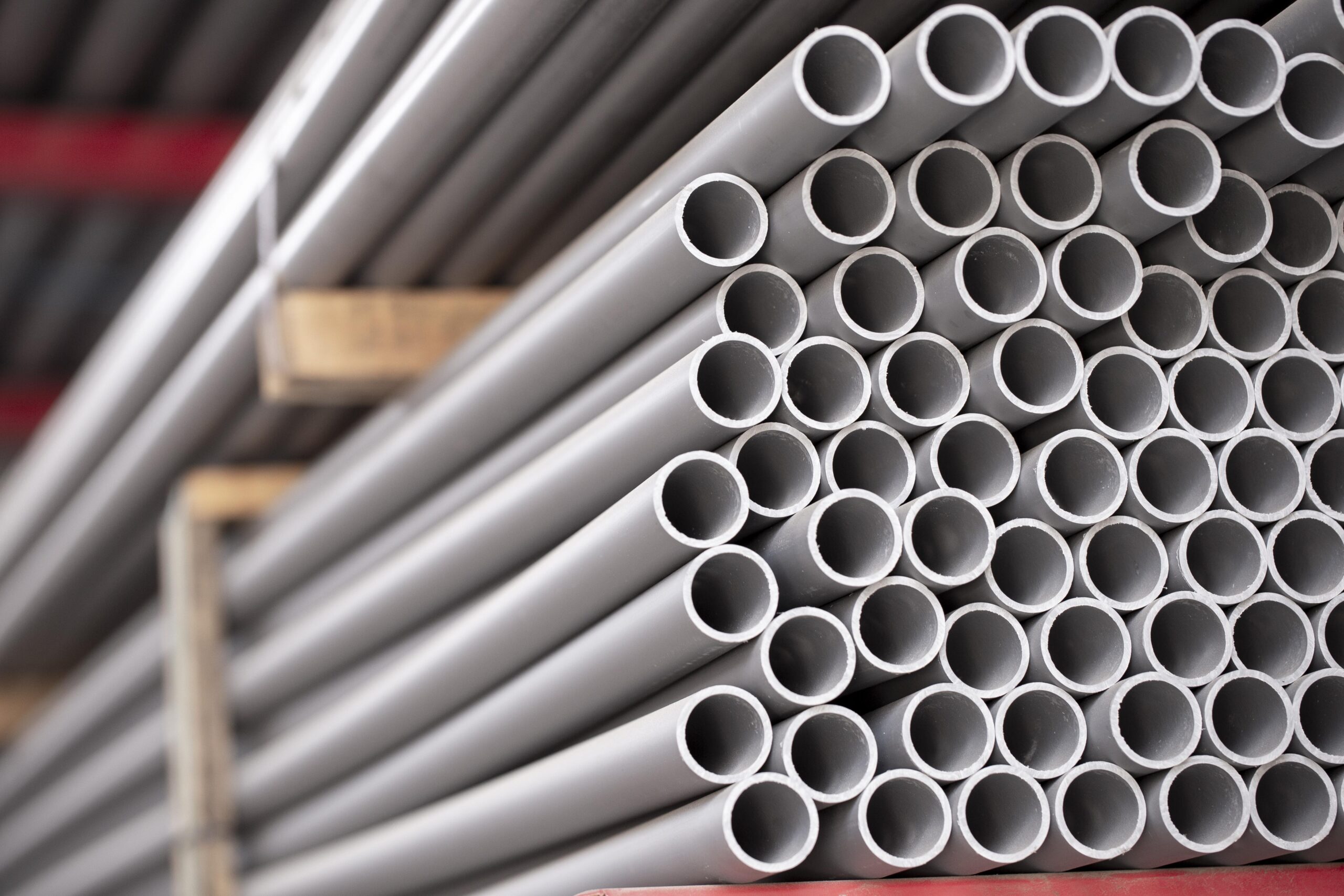
How to Check ISI PVC Pipe Brands India Before Buying PVC Electrical Conduit Pipes
Buying PVC electrical conduit pipes only by comparing price can be risky. The conduit protects electrical cables from physical damage, moisture, dust, heat, and other external conditions, so its quality directly affects the reliability of an electrical installation. For buyers evaluating ISI PVC pipe brands India, checking the actual certification marking, applicable Indian Standard, dimensions, mechanical properties, and manufacturer information is more useful than relying only on packaging or sales claims.
For rigid plain PVC conduits, IS 9537 (Part 3) covers circular rigid, non-flame-propagating, non-threadable plain conduits made from insulating materials. The standard also addresses classification, marking, dimensions, mechanical properties, heat resistance, burning resistance, and electrical characteristics. PVC conduit pipe manufacturers in India should ensure their products meet these applicable requirements for reliable performance and electrical safety.
This guide explains the practical checks buyers should make before purchasing PVC electrical conduit pipes for residential, commercial, industrial, and infrastructure projects.
Call us: +91 99495 04930
What Does ISI Quality Mean for PVC Electrical Conduit Pipes?
ISI quality indicates that a product is covered by the relevant Indian Standard and, where applicable, carries the BIS Standard Mark under the conditions of the manufacturer’s licence. For electrical conduits, buyers should check whether the product marking corresponds to the applicable standard rather than treating a generic “ISI quality” claim as sufficient proof.
For rigid plain insulating conduits, IS 9537 (Part 3) is an important reference. BIS documentation specifies that the conduits are classified according to mechanical stress requirements, including light, medium, and heavy classifications.
Practical takeaway: Do not judge compliance from the word “ISI” alone. Check the standard reference, manufacturer details, product classification, and certification marking on the actual conduit.
How to Check ISI PVC Pipe Brands India Before Buying
A reliable inspection should cover both certification and physical product quality. Use the following checks before placing a bulk order.
1. Check the BIS Standard and Certification Mark
Start by checking the pipe itself rather than relying only on a catalogue or quotation. BIS documentation for IS 9537 (Part 3) specifies requirements concerning marking and the use of the Standard Mark.
Look for:
- Applicable Indian Standard reference
- BIS Standard Mark, where certification applies
- Manufacturer or trademark
- Nominal size
- Country of manufacture
- Product classification
- Batch or traceability information where applicable
The BIS product certification scheme for this conduit standard also specifies marking details on individual conduits and bundle labels.
2. Verify the Manufacturer Details
The manufacturer’s identity should be clear and consistent across the pipe, packaging, invoice, and technical documentation.
This matters because certification is associated with specific licensed production and products. If a seller cannot provide clear manufacturer details, applicable certification information, or technical documentation, treat that as a warning sign.
When comparing ISI PVC pipe brands India, verify the actual manufacturer instead of choosing solely on brand popularity or the lowest quotation.
3. Inspect Pipe Dimensions and Wall Thickness
Correct dimensions are essential because the conduit must provide adequate space and mechanical protection for the wiring system.
Check:
- Nominal diameter
- Outside diameter
- Inside diameter
- Wall thickness
- Length
- Socket dimensions, where applicable
- Uniformity of wall thickness
BIS testing information for IS 9537 (Part 3) includes dimensional checks such as outside diameter, inside diameter, conduit length, and wall-thickness uniformity.
For bulk procurement, request the manufacturer’s dimensional specification sheet and compare it with samples from the supplied lot.
4. Check Mechanical Strength and Impact Resistance
A conduit may look perfectly acceptable but still perform poorly under mechanical stress. During construction, pipes can experience bending, compression, impact, handling, transportation, and installation loads.
BIS testing information for IS 9537 (Part 3) includes bending, compression, impact, collapse, and heat-resistance testing.
Before buying, ask whether the product classification is suitable for the intended installation. A light-duty conduit should not automatically be substituted for a conduit intended for higher mechanical stress.
5. Examine the Pipe Surface and Finish
Physical inspection is a simple but useful quality-control step.
A good conduit should have:
- Consistent dimensions
- Smooth internal surface
- Uniform wall appearance
- Clean edges
- No visible cracks
- No significant deformation
- No obvious bubbles, holes, or surface defects
A smooth internal surface can make cable pulling easier and reduce unnecessary friction during installation. Austro Pipes describes its electrical conduit products as having smooth internal surfaces and being designed for residential, commercial, and industrial applications.
6. Check Fire and Electrical Performance
Electrical conduit is part of a wiring protection system, so buyers should consider more than physical appearance.
Relevant quality checks can include:
- Resistance to burning
- Resistance to heat
- Electrical strength
- Insulation resistance
- Mechanical performance
BIS laboratory information for IS 9537 (Part 3) lists tests covering resistance to burning, heat, electrical strength, and insulation resistance in addition to mechanical tests.
For projects with specific fire-safety requirements, ask the manufacturer for the relevant technical documentation rather than assuming every PVC conduit has identical fire-performance characteristics.
7. Match the Conduit Classification to the Application
Not every electrical installation has the same mechanical requirements.
The applicable standard classifies rigid conduits according to mechanical stresses, including:
| Classification | Typical consideration |
| Light mechanical stress | Locations where mechanical exposure is relatively limited |
| Medium mechanical stress | General installations requiring greater mechanical protection |
| Heavy mechanical stress | Applications exposed to higher mechanical loads |
The actual selection should be based on the installation environment, wiring design, building requirements, and applicable specifications rather than simply choosing the thickest or cheapest option.
8. Ask for Quality and Test Documentation
For residential purchases, product marking and physical inspection may be sufficient for an initial assessment. For commercial or bulk procurement, documentation becomes much more important.
Ask suppliers for relevant:
- Product specifications
- Test reports, where applicable
- Certification details
- Batch information
- Technical data sheets
- Installation recommendations
- Manufacturer declaration or compliance documentation
This approach helps contractors, builders, electrical professionals, and procurement teams compare suppliers on measurable criteria rather than marketing language.
What Makes a Good Electrical Conduit Pipe?
A good electrical conduit pipe should combine compliance, mechanical strength, dimensional consistency, insulation properties, appropriate fire performance, and installation practicality.
Key factors include:
- Applicable Indian Standard compliance
- Valid certification where required
- Correct size and wall dimensions
- Appropriate mechanical classification
- Resistance to impact and compression
- Suitable heat and burning performance
- Adequate electrical insulation characteristics
- Consistent manufacturing quality
- Clear and durable product marking
- Reliable manufacturer support and documentation
These factors are more meaningful than selecting a product based only on brand name or price.
How to Choose Among Top Electrical Conduit Pipe Brand in India Options
When comparing suppliers, create a simple procurement checklist and evaluate every manufacturer against the same criteria.
Consider:
- Certification and standard compliance
- Product range and available sizes
- Mechanical classification
- Quality-control procedures
- Manufacturing consistency
- Technical documentation
- Delivery capability
- Bulk-order support
- Fittings and accessories availability
- After-sales technical assistance
Buyers looking for Top electrical conduit pipe brand in India options should therefore compare documented product specifications and compliance information rather than relying solely on online rankings.
Should You Consider FRLS Conduit Products?
FRLS-related requirements may become relevant when a project has specific fire-safety considerations. However, buyers should distinguish between a general PVC conduit and a product specifically designed or specified for particular flame-retardant or low-smoke requirements.
When evaluating FRLS Conduit pipe manufacturers, ask for product-specific technical information and test documentation applicable to the exact product being supplied.
The right selection depends on the building type, installation environment, project specifications, and applicable safety requirements.
Why Manufacturer Quality Control Matters
Certification is important, but consistent manufacturing quality also matters because a conduit system needs reliable performance across an entire installation.
A manufacturer with documented quality-control processes can provide greater confidence in dimensional consistency, material quality, testing, batch traceability, and product conformity.
Austro Pipes states that it operates quality-testing facilities for PVC conduit pipes and supplies electrical conduit solutions for residential, commercial, and industrial applications.
This is particularly relevant for contractors and procurement teams purchasing conduit pipes in bulk, where inconsistent products can create installation problems across an entire project.
Common Mistakes to Avoid When Buying PVC Electrical Conduit Pipes
Avoid these common purchasing mistakes:
- Choosing only on the basis of price
- Checking the packaging but not the pipe marking
- Assuming every PVC conduit has the same mechanical strength
- Ignoring pipe dimensions and wall-thickness consistency
- Buying without confirming the applicable standard
- Accepting unsupported certification claims
- Failing to request technical documents for bulk purchases
- Selecting a conduit classification without considering the installation environment
- Not inspecting a sample before a large order
A few minutes of verification before procurement can help reduce quality and installation risks later.
A Simple Pre-Purchase Checklist
Before finalizing your order, confirm:
- Standard: Is the applicable Indian Standard clearly identified?
- Certification: Is the relevant BIS/Standard Mark information verifiable?
- Marking: Are manufacturer, size, classification, and other required markings present?
- Dimensions: Do the actual dimensions match the specification?
- Strength: Is the mechanical classification suitable for the application?
- Surface: Is the pipe free from visible manufacturing defects?
- Testing: Is relevant quality documentation available?
- Application: Is the conduit suitable for the intended environment?
- Supplier: Can the manufacturer support your quantity and technical requirements?
Why Choosing the Right Manufacturer Makes a Difference
A dependable manufacturer should be able to explain the product standard, available classifications, dimensions, testing approach, and recommended applications clearly.
Austro Pipes manufactures PVC electrical conduit solutions and serves residential, commercial, industrial, and infrastructure applications. Its website also highlights smooth internal surfaces, durability, moisture and corrosion resistance, and ease of installation as product features.
For buyers comparing ISI PVC pipe brands India, this type of product-level information is useful because it allows the purchasing decision to be based on specifications and application requirements rather than brand claims alone. It also helps buyers evaluate top PVC pipe manufacturers in India based on product quality, applicable standards, and suitability for their specific requirements.
Conclusion
Checking certification, dimensions, mechanical strength, marking, fire-related performance, and technical documentation is a better way to evaluate ISI PVC pipe brands India than relying on price or packaging alone. For residential, commercial, and industrial projects, the conduit should match the application’s mechanical and electrical protection requirements.
Austro Pipes provides PVC electrical conduit solutions for different installation environments, supported by product specifications and quality-focused manufacturing. If you are planning a new electrical installation or bulk procurement, contact Austro Pipes to discuss the appropriate conduit size, classification, and project requirements. Learn more about Austro Pipes’ PVC electrical conduit solutions and find the right option for your project.
Need Help Choosing the Right PVC Electrical Conduit Pipes?
Choosing the right conduit can make a significant difference to the safety, durability, and reliability of an electrical installation. For product specifications, suitable conduit options, bulk requirements, or project-specific guidance, connect with the Austro Pipes team.
Call us: +91 99495 04930
Email: info@austropipes.com
Frequently Asked Questions
How can I verify the ISI mark on a PVC electrical conduit pipe?
Check the actual conduit for the applicable standard reference and BIS Standard Mark where certification applies. Also verify manufacturer information, product classification, size, and supporting certification details. For bulk procurement, request relevant technical and certification documents and cross-check them with the product supplied.
Which IS standard applies to rigid PVC electrical conduit pipes?
IS 9537 (Part 3) covers rigid plain conduits of insulating materials for electrical installations. BIS describes the standard as covering circular, rigid, non-flame-propagating and non-threadable plain-ended and socket-ended conduits of insulating materials.
What should I check besides the ISI PVC Pipe Brands India mark?
Check dimensions, wall-thickness consistency, mechanical classification, surface finish, impact and compression performance, heat and burning resistance, electrical characteristics, manufacturer details, and technical documentation. For larger projects, sample inspection and batch-level quality checks can provide additional assurance.
Are all PVC electrical conduits equally strong?
No. Conduits can have different mechanical classifications and specifications. IS 9537 (Part 3), for example, identifies light, medium, and heavy mechanical-stress classifications. The correct option depends on the installation environment and the level of physical protection required.
What documents should I request for bulk PVC conduit purchases?
For bulk procurement, request the product specification or technical data sheet, applicable certification details, relevant test documentation, manufacturer information, batch or traceability information where available, and installation recommendations. These documents make it easier to compare suppliers using objective criteria.
Is PVC conduit suitable for residential and commercial wiring?
PVC conduit is widely used for protecting electrical wires and cables in residential, commercial, and industrial installations. The correct conduit should be selected according to the installation conditions, required mechanical protection, applicable standards, and project specifications.
How do I choose the right conduit size?
Choose the size according to the number and type of cables, available internal space, wiring arrangement, installation method, and applicable electrical requirements. Do not select a conduit based only on its outside diameter. Confirm the manufacturer’s dimensional specifications and ensure there is adequate internal space for safe and practical cable installation.