PVC Junction Box for Safe Electrical Wire Connections in Modern Building Wiring
By@seo
Electrical connections need proper protection, organisation and accessibility to support a reliable wiring system. A junction box provides an enclosure for wire joints and branching points, helping prevent accidental contact with electrical connections when the correct box is selected and installed. Choosing a dependable PVC junction box manufacturer in India is therefore an important consideration for residential, commercial and industrial construction projects.
PVC junction boxes are commonly used with compatible electrical conduits to organise wiring routes and protect connections from everyday physical contact. However, their suitability depends on material quality, dimensions, installation conditions and compatibility with the overall electrical system. Understanding these factors helps builders, contractors, electricians and procurement teams make informed decisions for modern building wiring.
What Is a PVC Junction Box?
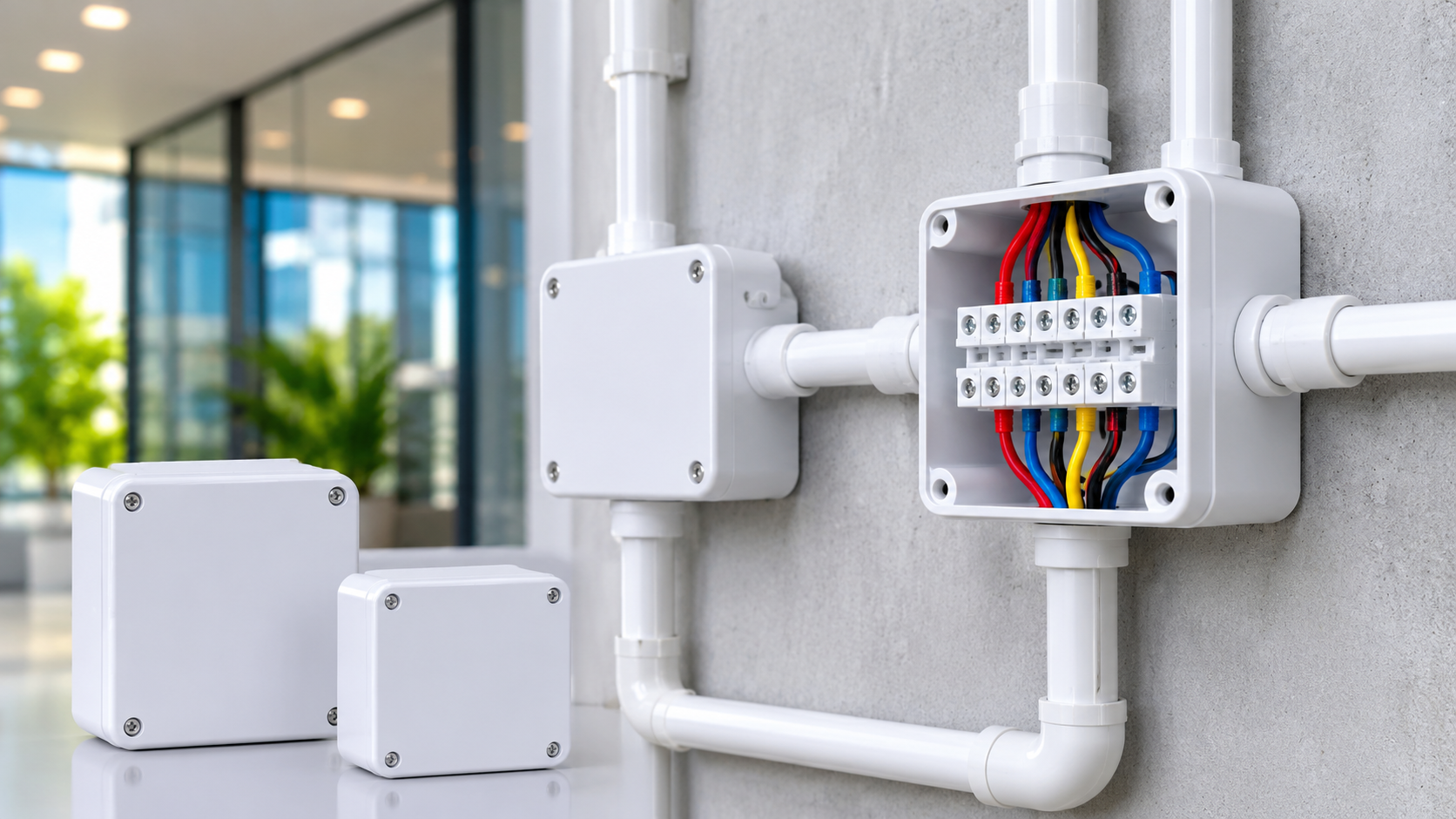
A PVC junction box is an enclosure made from polyvinyl chloride (PVC) that houses electrical wire connections, cable branches or wiring junctions. It creates a designated space for connections instead of leaving joints exposed inside walls, ceilings or other building areas. These boxes are installed at suitable points along electrical conduit routes, such as where wiring branches towards different switches, lights or outlets. Depending on the design, a box may include conduit entry points, a removable cover and mounting provisions. A properly selected enclosure helps organise connections and supports safer inspection and maintenance. However, a standard PVC junction box is not automatically waterproof, fire-resistant or suitable for every electrical environment. Its ratings and intended application must be checked before installation.Why Are Junction Boxes Important in Modern Building Wiring?
Junction boxes help keep electrical connections contained, accessible where required and arranged according to the wiring layout. They are useful in buildings where several circuits or conduit routes meet at designated points. Their key benefits include:- Protection from accidental contact: A suitable enclosure covers wire joints and reduces the risk of direct contact with live parts when properly installed.
- Organised wiring: Connections remain grouped at planned locations, making electrical layouts easier to understand.
- Simplified maintenance: Accessible boxes allow qualified electricians to inspect connections without unnecessarily disturbing surrounding wiring.
- Support for conduit systems: Compatible entry points help connect conduits and maintain a structured cable route.
- Installation flexibility: Different box shapes and configurations can accommodate different wiring layouts.
How Does a PVC Junction Box Work?
A junction box provides an enclosed point where electrical conductors can be joined, branched or routed according to the circuit design. Incoming and outgoing conduits guide cables into the box, while approved connectors or terminals secure the electrical connections. For example, a lighting circuit in a home may require a planned branching point to distribute wiring towards multiple light fittings. An appropriately sized enclosure can accommodate the intended connections while keeping them contained and accessible for maintenance. The installation process generally involves:- Identifying the required connection point from the electrical layout.
- Selecting a box with suitable dimensions, entry points and environmental ratings.
- Mounting the box securely and connecting compatible conduits.
- Making electrical connections using suitable terminals or connectors.
- Securing the cover and checking that the completed installation meets applicable electrical requirements.
Key Features to Check Before Buying a PVC Junction Box
The right enclosure should match the installation requirements rather than being selected on price alone. A PVC junction box for buildings should be evaluated for construction quality, compatibility and suitability for its intended location.1. Material Quality and Construction
Check the consistency of the moulding, the condition of the edges and the fit of the cover. The enclosure should be free from visible cracks, deformation and manufacturing defects that could affect installation or protection. Ask the manufacturer for relevant technical specifications and test documentation. Do not assume that every PVC product has the same mechanical strength, temperature tolerance or fire-performance characteristics.2. Size and Internal Space
The box must provide sufficient room for the intended conductors, connectors and cable bends. An undersized enclosure can make connections difficult to arrange and may cause excessive crowding. Select dimensions according to the number and type of connections, the wiring layout and the applicable installation requirements.3. Conduit Compatibility
Check the entry sizes and configuration against the conduits being used. Compatible connections help create a neat installation and reduce the likelihood of gaps or poorly secured entries. A suitable junction box for wire connections should also allow the cover to be fitted securely after the electrical work is completed.4. Cover and Environmental Suitability
The cover should fit correctly and remain secure during normal use. For damp, dusty or exposed locations, verify the product’s stated protection rating and confirm that the complete installation meets the environmental requirements. A basic indoor box should not be assumed suitable for outdoor or wet locations.5. Installation and Maintenance Requirements
Consider the mounting arrangement, access for future inspection and the location of nearby building components. The box should be positioned so that authorised maintenance can be performed without unnecessary damage to walls or ceilings.How to Choose a PVC Junction Box Manufacturer in India
Selecting the right PVC junction box manufacturer in India involves evaluating product specifications, quality controls and supply consistency. Buyers comparing the largest PVC pipe manufacturers should also assess their product range, manufacturing standards and ability to supply reliable solutions for different electrical applications. Manufacturers and suppliers should be able to explain how their products suit the intended installation requirements. Use the following checks when comparing options:- Product range: Confirm the availability of relevant sizes, shapes, covers and conduit entry configurations.
- Technical documentation: Request product specifications, installation guidance and applicable test reports.
- Manufacturing consistency: Check whether samples show consistent dimensions, sound moulding and properly fitting covers.
- Application suitability: Confirm that the product is designed for the intended indoor, outdoor or other installation conditions.
- Supply capability: Evaluate availability, order quantities, delivery schedules and packaging for the project.
- Technical support: Prefer suppliers who can answer questions about compatibility and intended use clearly.
Common Mistakes to Avoid During Installation
Even a well-made enclosure may not provide the expected protection if installed incorrectly. Avoid these common mistakes:- Choosing a box that is too small for the connections.
- Forcing incompatible conduits into entry points.
- Leaving covers loose or openings inadequately protected.
- Placing boxes where they cannot be accessed when maintenance is required.
- Using an indoor-rated product in conditions for which it is not designed.
- Overlooking damaged insulation, loose terminals or unsuitable connectors.
Where Are PVC Junction Boxes Commonly Used?
PVC enclosures are used in a range of wiring applications, provided the selected product is suitable for the conditions.- Residential buildings: Lighting circuits, switch wiring and planned connection points.
- Commercial properties: Offices, retail spaces and other buildings with organised conduit-based wiring.
- Industrial facilities: Suitable indoor wiring routes in areas where the product’s ratings meet site conditions.
- Institutional buildings: Schools, offices and similar facilities requiring accessible, organised electrical connections.