Top 10 CPVC Pipe Companies in India: Best Brands for Quality & Plumbing
By@seo
Choosing the right piping system is an important decision for residential, commercial and industrial plumbing projects. CPVC pipes are widely considered for hot and cold water distribution because of their heat resistance, corrosion resistance, lightweight construction and compatibility with suitable plumbing fittings.
When comparing the Top 10 CPVC Pipe Companies in India, buyers should look beyond brand recognition and price. Product standards, pipe dimensions, pressure ratings, temperature requirements, fitting compatibility, installation practices and product availability can all affect the performance of a plumbing system.
This guide explains what makes a CPVC piping system suitable, how to compare manufacturers, what specifications to check and how to select the right products for different plumbing requirements.
The choice should be based on the operating temperature, pressure, application, applicable standard and manufacturer’s specifications.
For hot-water plumbing, CPVC is generally considered where the selected product is specifically designed and rated for that service.
What Is CPVC Pipe?
CPVC stands for Chlorinated Polyvinyl Chloride, a thermoplastic material produced by modifying PVC through a chlorination process. This modification increases its temperature-handling capability compared with conventional PVC. A reliable CPVC Pipes Manufacturer focuses on producing pipes that meet the required quality standards and are suitable for hot and cold water plumbing applications. CPVC pipes are commonly used for hot and cold water distribution in residential buildings, offices, hotels, hospitals, commercial properties and other plumbing applications. For potable hot and cold water distribution, IS 15778:2007 specifies requirements and test methods for CPVC pipes. The BIS standard covers pipes intended for water service up to and including 82°C. Because CPVC systems are designed for specific temperature and pressure conditions, selecting the correct product specification is just as important as selecting the manufacturer.Why Are CPVC Pipes Popular for Plumbing?
CPVC has become a commonly considered material for water-supply plumbing because it combines several practical properties in one system.1. Suitable for Hot and Cold Water
CPVC is designed for applications where water temperatures can be significantly higher than those encountered in ordinary cold-water systems. This makes it useful for domestic hot-water distribution when the selected product is rated for the intended operating conditions.2. Corrosion Resistance
Unlike many metallic piping materials, CPVC does not rust. Its resistance to corrosion can be useful in water-supply installations where long-term exposure to moisture and certain water conditions is a concern.3. Lightweight Construction
CPVC pipes are relatively lightweight compared with many traditional metal alternatives. This can simplify transportation, handling and installation at construction sites.4. Smooth Internal Surface
The internal surface of CPVC piping is relatively smooth, which can help reduce resistance to water flow compared with rougher internal surfaces.5. Availability of Matching Components
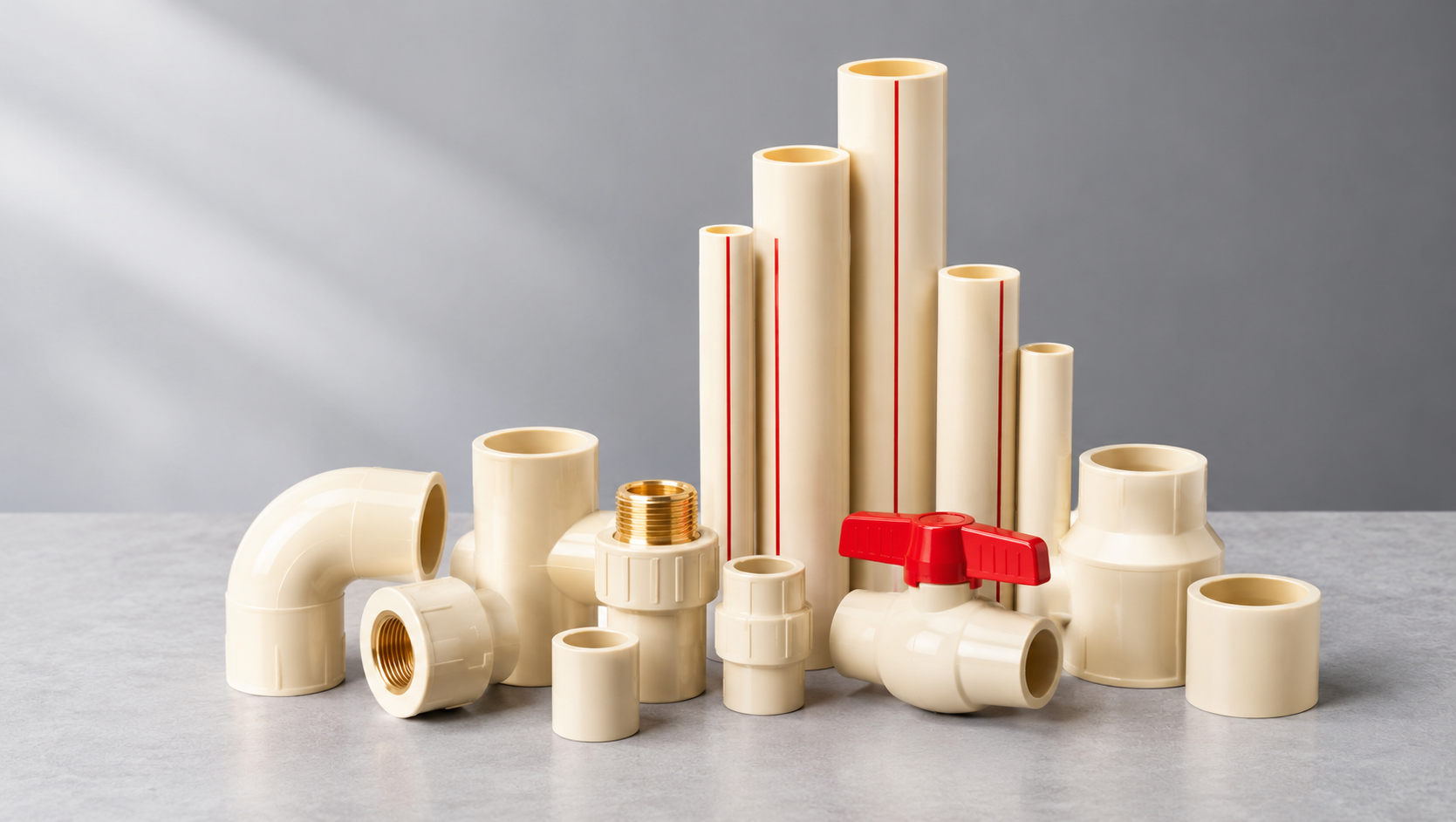
A complete plumbing system can include pipes, elbows, tees, couplers, adapters and other components. Using compatible components from an appropriate system helps simplify installation and maintenance.How to Compare the Top 10 CPVC Pipe Companies in India
The Top 10 CPVC Pipe Companies in India should not be compared only by brand popularity. A better approach is to evaluate the technical and practical factors that directly affect the performance of the plumbing system.Check the Applicable Indian Standard
For potable hot and cold water distribution, buyers should check whether the selected product complies with the relevant Indian Standard. BIS documentation identifies IS 15778:2007 as the specification for chlorinated polyvinyl chloride pipes used for potable hot and cold water distribution supplies. The standard includes requirements related to classification, dimensions, testing, mechanical properties and other performance parameters.Compare Pipe Dimensions
Pipe diameter and wall thickness influence how a system handles water flow and pressure. Before purchasing, check:- Nominal pipe size
- Outside diameter
- Wall thickness
- Standard dimension ratio
- Applicable pressure classification
- Compatibility with fittings
Consider Temperature Requirements
Hot-water systems require careful attention to operating temperature. The expected temperature should be compared with the manufacturer’s technical specifications. The BIS specification for CPVC pipes under IS 15778 includes products intended for water service up to and including 82°C. For a specific project, however, the manufacturer’s published rating should always be checked before installation.Check Pressure Requirements
Water pressure can vary between residential floors, commercial installations, pumping systems and industrial applications. A pipe should therefore be selected according to the expected working pressure and temperature rather than simply choosing a commonly used size.Verify Fitting Compatibility
A CPVC installation is not made up of pipes alone. It also requires compatible fittings and joining materials. When purchasing cpvc pipe fittings, check that the fittings are designed for the selected pipe system and application. Using incompatible components can create weak joints and may increase the risk of leakage.What Makes a CPVC Pipe Brand Reliable?
A reliable manufacturer is not simply one with strong market visibility. Buyers should evaluate the complete product and support ecosystem. Important factors include:- Compliance with applicable standards
- Product testing and quality-control processes
- Clearly stated technical specifications
- Consistent dimensional quality
- Availability of matching fittings
- Installation guidance
- Distributor network
- Warranty terms
- Technical support
- Availability of replacement products
Where Are CPVC Pipes Commonly Used?
CPVC systems can be considered for a wide range of water-supply applications.Residential Plumbing
Homes and apartments commonly require separate hot- and cold-water lines. CPVC can be considered for internal water distribution where the selected system is approved for the intended application.Commercial Buildings
Offices, retail buildings, restaurants and other commercial properties may use CPVC systems for water distribution depending on the building design and project specifications.Hotels and Hospitals
These facilities can have extensive hot- and cold-water requirements. Product selection should account for water temperature, pressure, building size and maintenance requirements.Institutional Buildings
Schools, hostels and other institutions can also require durable water-distribution systems. The appropriate piping material should be selected according to the building’s engineering requirements.CPVC vs PVC: Which One Should You Choose?
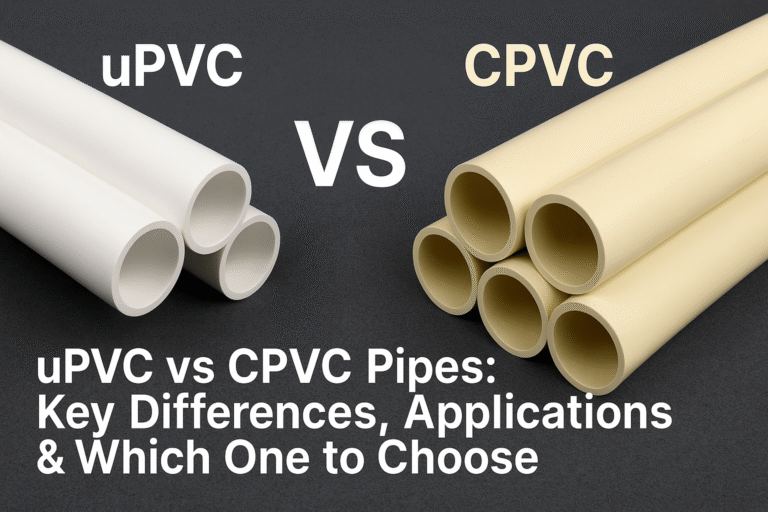
CPVC and PVC are both thermoplastic piping materials, but they are not interchangeable for every application.| Feature | CPVC | PVC |
| Hot-water applications | Commonly suitable | More limited depending on product |
| Cold-water applications | Suitable | Suitable for applicable systems |
| Heat resistance | Higher than standard PVC | Lower than CPVC |
| Corrosion resistance | High | High |
| Weight | Lightweight | Lightweight |
| Typical plumbing use | Hot and cold water | Cold water and other applications |
How to Choose the Right CPVC Pipe for Your Project?
Selecting from the Top 10 CPVC Pipe Companies in India becomes easier when you follow a structured evaluation process.Step 1: Identify the Application
First determine whether the pipe will be used for:- Cold-water supply
- Hot-water supply
- Combined hot and cold water
- Residential plumbing
- Commercial plumbing
- Institutional applications
Step 2: Estimate Flow and Pressure Requirements
Determine the expected water flow, operating pressure and temperature. This helps identify the appropriate pipe size and specification.Step 3: Check Product Certification
Verify applicable standards and certification from reliable documentation. Do not rely solely on packaging claims or verbal assurances from sellers.Step 4: Select Compatible Fittings
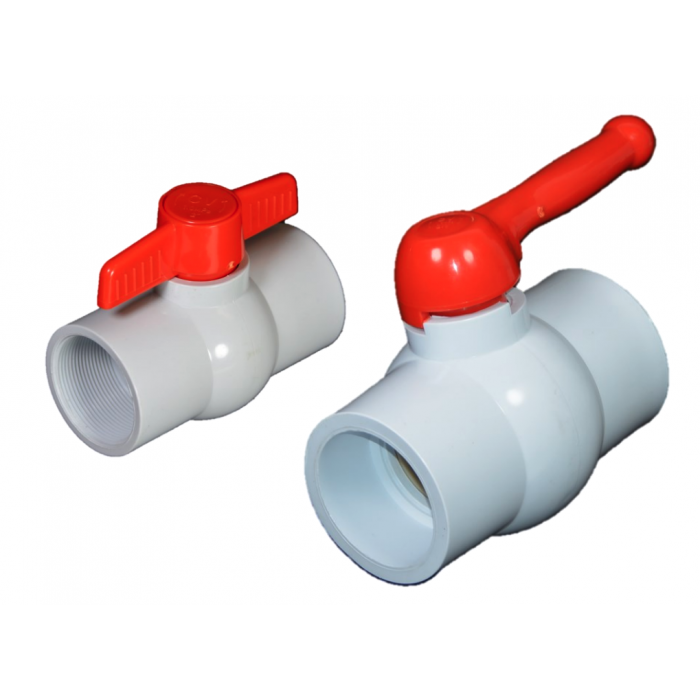
Choose compatible elbows, tees, adapters, couplers, valves and joining materials for the selected system.Step 5: Compare Total Cost
The actual project cost includes more than the pipe price. Consider:- Pipes
- Fittings
- Valves
- Joining materials
- Labour
- Transportation
- Installation
- Maintenance
What Affects CPVC Pipe Prices in India?
CPVC pipe prices can vary considerably depending on the product specification and market conditions. Major price factors include:- Pipe diameter: Larger pipes generally require more material.
- Wall thickness: Different classifications can have different material requirements.
- Product series: Specialized plumbing systems may have different pricing.
- Brand: Manufacturing processes, distribution and product positioning can influence pricing.
- Quantity: Bulk project purchases may have different commercial terms.
- Location: Transportation and local distribution can affect final prices.
- Fittings: The complete plumbing system includes more than straight pipe lengths.
Common Mistakes to Avoid When Buying CPVC Pipes
Even a technically suitable pipe can create problems if it is incorrectly selected or installed.Buying Only on Price
The lowest-priced product is not necessarily the most economical choice. Standards, specifications, fitting compatibility and product reliability should also be considered.Ignoring Temperature Ratings
A pipe intended for one application should not automatically be assumed suitable for a higher-temperature installation.Mixing Incompatible Components
Pipes, fittings and joining materials should be compatible with the selected system.Choosing the Wrong Size
Oversizing or undersizing can affect the plumbing system’s performance and project economics.Ignoring Installation Practices
Correct cutting, preparation, joining, alignment and curing are essential for reliable joints.Purchasing From Unverified Sources
Buying from unreliable channels can increase the risk of receiving incorrect, damaged or counterfeit products. Authorized distribution channels are generally preferable.What Should Plumbers and Contractors Check Before Installation?
Before beginning installation, professionals should verify the product specifications against the plumbing design. A practical checklist includes:- Pipe size confirmed
- Pressure requirement confirmed
- Temperature requirement confirmed
- Applicable standard checked
- Fittings matched
- Joining materials compatible
- Pipes inspected for visible damage
- Installation instructions reviewed
- Storage conditions maintained
- Testing procedure planned
How Can You Identify the Best CPVC Pipe for Your Needs?
There is no single CPVC product that is automatically the best choice for every project. The appropriate option depends on the building type, water temperature, pressure, pipe size, installation conditions and budget. When comparing options from PVC pipe manufacturers company in India, it is important to evaluate product quality, applicable standards and suitability for the intended plumbing application before making a final decision. When comparing the best cpvc pipe company in india, consider the complete system rather than judging the pipe alone. A good selection process should answer five questions:- Does the product meet the applicable standard?
- Is it suitable for the required temperature?
- Can it handle the expected pressure?
- Are compatible fittings readily available?
- Can the manufacturer or supplier provide technical and after-sales support?