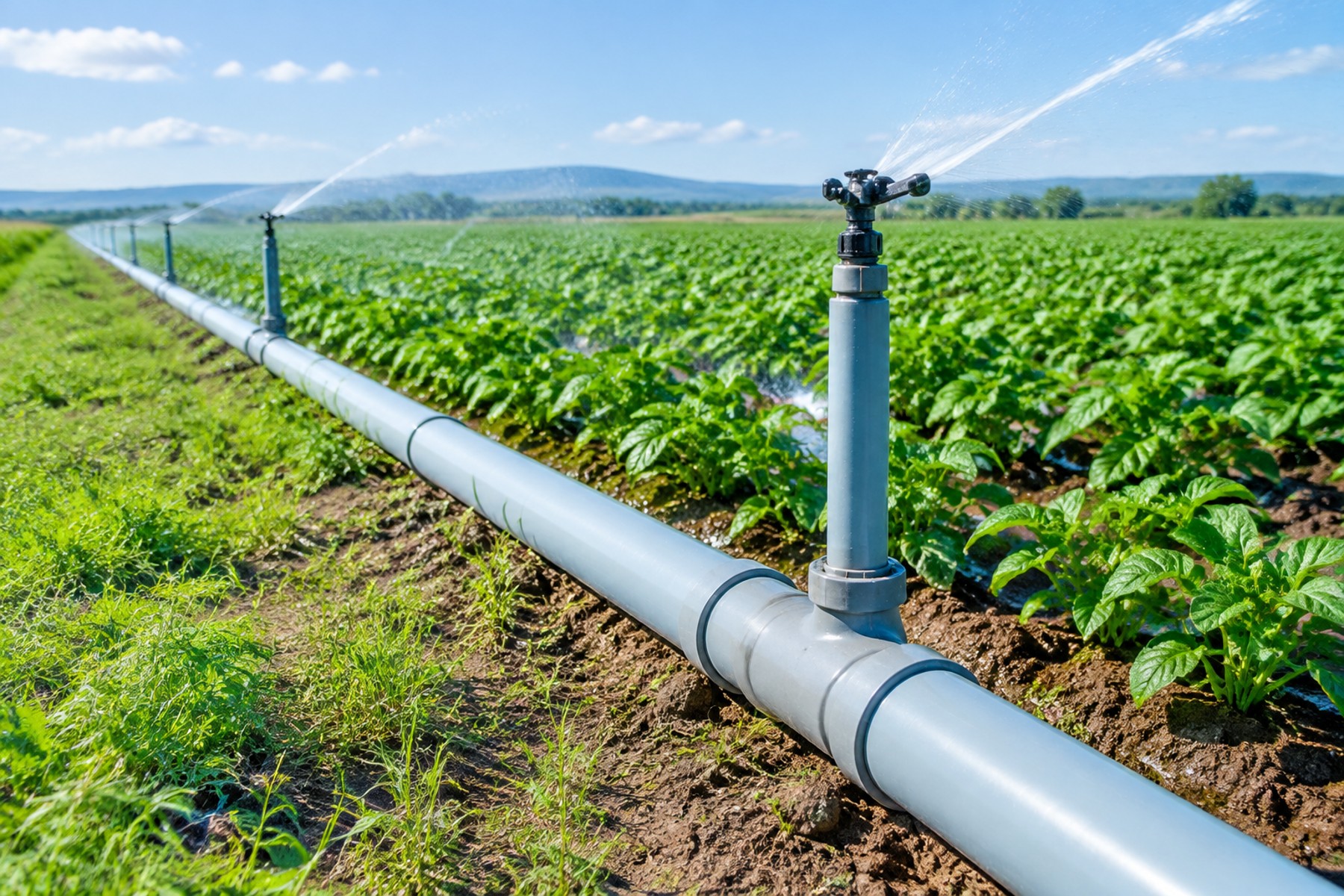
PVC Rigid Agriculture Pipes: Types, Sizes and What to Check Before Buying
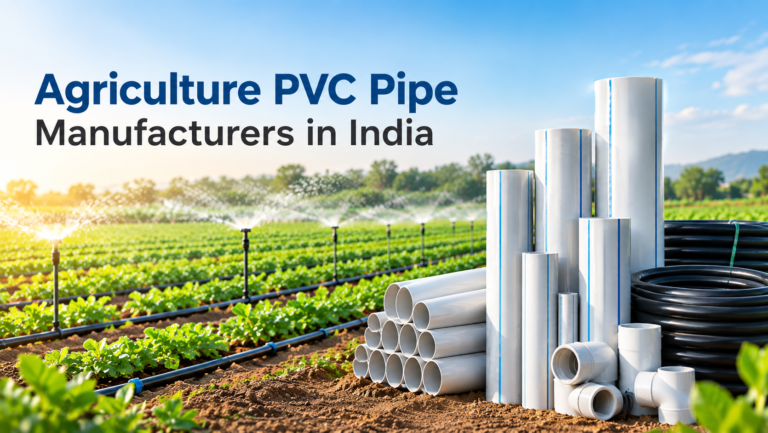
Rigid PVC pipes are widely used on farms for carrying water from the source to the field. The right pipe depends on pressure class, size, jointing method and how it is installed. This guide explains the basics: what these pipes are, their benefits, sizes and types, how they compare with other materials, and what to check before buying.
What Are PVC Rigid Agriculture Pipes?
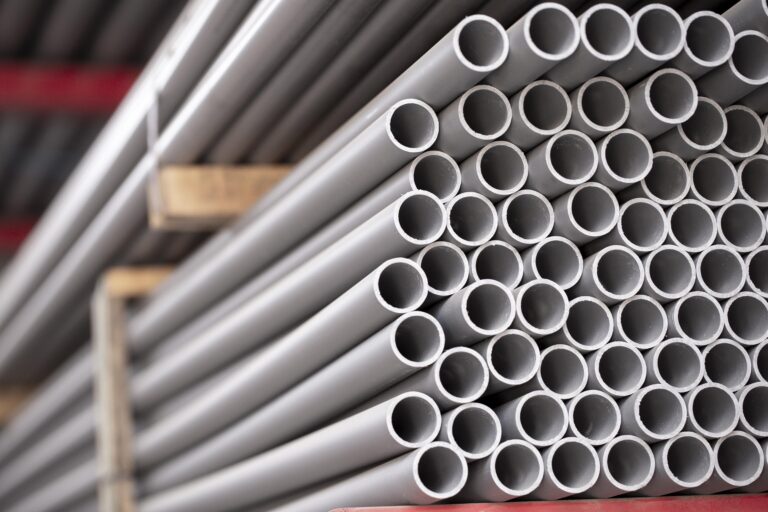
PVC rigid agriculture pipes are manufactured from unplasticized polyvinyl chloride (uPVC) — a thermoplastic that contains no plasticizers, making it inherently stiff, strong, and dimensionally stable. Unlike flexible PVC used in cable insulation or garden hoses, rigid PVC maintains its cylindrical shape under soil load and internal water pressure, which is exactly what buried farm distribution lines demand.
| Pressure Class | Working Pressure (MPa) | Typical Application |
|---|---|---|
| PN 2.5 | 0.25 | Low-pressure gravity flow |
| PN 4 | 0.40 | Surface irrigation laterals |
| PN 6 | 0.60 | Drip/sprinkler sub-mains |
| PN 8 | 0.80 | Pump-fed distribution lines |
| PN 10 | 1.00 | High-pressure main lines |
| PN 12.5 | 1.25 | Deep-bore well risers |
Key Benefits of Rigid PVC Pipes for Farming
Corrosion immunity. Unlike galvanised iron or mild steel pipes, rigid PVC does not rust, scale, or react with fertiliser-laden irrigation water. This is especially critical in regions with high TDS or saline groundwater.
UV exposure. Pipes left above ground are exposed to sunlight, which can affect PVC over time. Ask the manufacturer whether a pipe is suitable for above-ground use, and protect exposed runs as they advise.
Smooth bore, low friction loss. The internal surface of rigid PVC has a Hazen-Williams roughness coefficient of 150, significantly higher than metal pipes. This translates to lower pumping energy and reduced electricity bills over the system’s lifetime.
Types, Sizes & Specifications
PVC rigid agriculture pipes are available in several configurations to match different irrigation layouts:
Pressure Pipes (Plain Ends / Socket-Spigot): The most common format, supplied in 3-metre and 6-metre lengths with solvent-weld socket joints. Available from 20 mm to 400 mm nominal diameter in pressure classes PN 4 through PN 12.5.
Column Pipes: Reinforced rigid PVC pipes used for submersible pump risers in borewells. These handle higher internal pressures and axial loads from pump weight.
Casing Pipes: Used to line borewell shafts, preventing wall collapse and sand ingress. Manufactured in heavier wall thicknesses per IS 4985 or IS 12818.
SWR (Soil, Waste & Rain) Pipes: While not strictly agricultural, SWR pipes are sometimes used for field drainage and rainwater collection in farm settings.
Key specification dimensions to verify before purchase:
- Outside diameter (OD) and wall thickness per IS 4985 Tables 1–4
- Standard Dimension Ratio (SDR) — lower SDR means thicker walls and higher pressure rating
- Length — 3 m, 6 m, or custom cut
PVC Rigid vs HDPE vs Other Materials
Choosing between PVC rigid and HDPE for farm piping is one of the most common procurement decisions Indian farmers and contractors face. Here is a direct comparison:
| Parameter | PVC Rigid (uPVC) | HDPE | Galvanised Iron (GI) |
|---|---|---|---|
| Corrosion | Immune | Immune | Prone to rust |
| Jointing Method | Solvent cement / rubber ring | Butt fusion / electrofusion | Threaded / welded |
| Flexibility | Rigid — straight runs only | Flexible — bends around obstacles | Rigid |
| Weight | Light | Lightest | Heavy |
When to choose rigid PVC: Straight distribution lines, above-ground runs, pump-to-field mains, and any project where solvent-cement joints offer faster on-site assembly.
When HDPE may be better: Undulating terrain requiring flexible pipe bending, trenchless installations (HDD), and areas with seismic activity.
- Trench depth: Bury pipes to the depth recommended by the manufacturer or your engineer, to protect them from surface loads and sunlight.
- Bedding material: Use fine sand or sifted soil as bedding — never sharp gravel, which can create point loads on the pipe wall.
- Solvent cement jointing: Apply primer first, then solvent cement to both pipe spigot and socket. Insert, quarter-turn, and hold as the cement manufacturer advises. Allow the full cure time specified by the cement manufacturer before pressurising.
- Thermal expansion allowance:Rigid PVC expands and contracts with temperature changes. Follow the manufacturer’s guidance on expansion loops or couplers at direction changes.
- Air release valves: Install at high points to prevent air locks that cause water hammer and pressure surges.
Common Mistakes
- Using plumbing-grade PVC instead of IS 4985 agriculture-grade pipes — thinner walls collapse under soil load.
- Skipping the primer before solvent cement application — joints fail within months.
- Pulling pipes through trenches without bedding — rocks and debris scratch the bore, creating weak points.
Buying Checklist
- [ ] Confirm the correct pressure class (PN) for your pump head and layout
- [ ] Check outside diameter and wall thickness against IS tables
- [ ] Ask for batch test certificates (hydrostatic, reversion, Vicat)
- [ ] Ensure solvent cement and rubber ring sealants are compatible with the pipe grade
- [ ] Factor in transportation — rigid pipes need flatbed trucks, not box containers
- [ ] For government tenders, confirm subsidy eligibility documentation from the manufacturer
FAQs
What is the difference between PVC rigid agriculture pipes and regular PVC pipes?
Regular PVC pipes may follow Type A (water supply) specifications with different dimensional and pressure tolerances. Rigid agriculture pipes conform to IS 4985 Type B, which includes agricultural-specific tests for reversion, impact, and chemical resistance suited to field conditions.
What sizes do PVC rigid agriculture pipes come in?
They are available in nominal diameters from 20 mm to 630 mm, in pressure classes PN 2.5 through PN 12.5. Standard lengths are 3 metres and 6 metres, with socket-spigot or plain-end configurations.
How long do rigid PVC agriculture pipes last?
Properly installed and ISI-compliant rigid PVC pipes can deliver decades of service. Actual lifespan depends on water chemistry, operating pressure, UV exposure, and installation quality rather than a single universal figure.
Can PVC rigid agriculture pipes be used above ground?
Check with the manufacturer first. If a pipe is suitable for above-ground use, protect it from sunlight and allow for thermal expansion as they advise.
For product details and enquiries, you can contact Austro Pipes through the website, austropipes.com. Always confirm specifications for your own project with a qualified plumber, electrician or engineer before you buy or install.