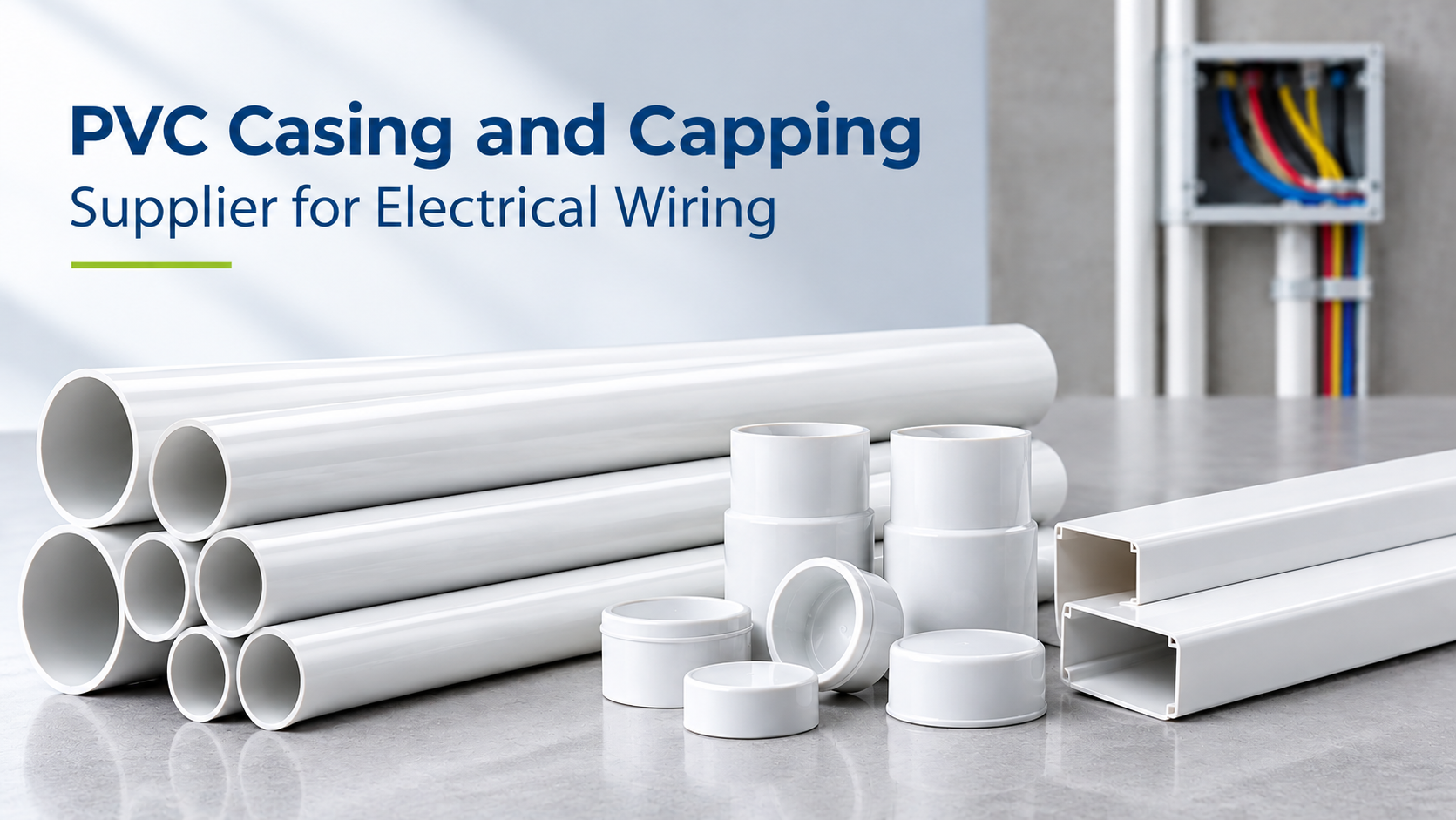
PVC Casing and Capping Supplier for Electrical Wiring: Applications, Benefits and Selection Factors
Electrical wiring needs suitable protection to reduce exposure to everyday physical damage, dust and accidental contact. A reliable PVC Casing and Capping Supplier for Electrical Wiring can help electricians, contractors, builders and homeowners select suitable products for organised surface wiring installations.
PVC casing and capping provide a practical way to route cables along walls and ceilings without embedding them inside the structure. However, the right choice depends on cable quantity, dimensions, installation conditions, material quality and compatibility with the electrical system.
This article explains how casing and capping work, their applications and benefits, and the factors to evaluate before purchasing them for residential, commercial or other suitable electrical installations.
What Is PVC Casing and Capping for Electrical Wiring?
PVC casing and capping are components used to enclose and organise electrical wires installed on surfaces. The casing forms the base channel that holds the cables, while the capping fits over it to cover the wiring.
The system typically consists of:
- PVC casing: A channel fixed to a suitable surface to route and support cables.
- PVC capping: A matching cover that encloses the cables and helps keep them organised.
- Compatible accessories: Depending on the product range, connectors, bends and end pieces can help create a neat installation.
PVC casing for electrical wiring is commonly considered for installations where concealed wiring is impractical or where surface-mounted cable routes are preferred. Product suitability depends on the intended application and the manufacturer’s specifications.
Common Applications of PVC Casing and Capping
PVC casing and capping are used in several settings where organised surface wiring is appropriate.
- Residential properties: Routing cables in rooms, corridors and other suitable areas during renovation or electrical upgrades.
- Offices and commercial buildings: Organising wiring along walls in workspaces, shops and small business premises.
- Renovation projects: Adding electrical points without extensive wall cutting, subject to the installation design.
- Light commercial installations: Managing selected cable routes where the product’s capacity and ratings meet the requirements.
For example, when an office requires an additional electrical point, a properly sized casing-and-capping system may provide a practical surface route. The installer must still assess cable capacity, circuit requirements, environmental conditions and applicable electrical safety rules.
Key Benefits of PVC Casing and Capping
A suitable casing-and-capping system improves cable organisation and can help protect wiring from certain forms of everyday physical contact. Its actual performance depends on product quality, correct installation and the surrounding environment.
Key benefits include:
- Organised cable routing: Keeps wires aligned along planned paths rather than loosely arranged across surfaces.
- Improved appearance: Covers visible wiring to create a cleaner finish.
- Convenient installation: Can simplify selected wiring additions and renovation work.
- Basic physical protection: Helps reduce exposure to accidental contact, abrasion and some minor impacts.
- Accessible wiring routes: The cover may be removable for authorised inspection or maintenance, depending on the design.
- Practical material handling: Lightweight PVC components can be easier to transport and cut than some heavier alternatives.
PVC capping for cable protection should not be treated as a substitute for proper cable insulation, earthing, circuit protection or other required electrical safeguards. Standard casing and capping are also not automatically suitable for wet, outdoor, high-temperature or fire-sensitive environments.
How to Choose a PVC Casing and Capping Supplier for Electrical Wiring
Choosing the right supplier involves more than comparing prices. A dependable PVC Casing and Capping Supplier for Electrical Wiring should offer suitable dimensions, consistent product quality, compatible covers and clear technical information.
Evaluate these factors before placing an order.
1. Check Material Quality
Ask about the PVC material, manufacturing consistency and intended application. Examine the product for cracks, uneven edges, warping and other visible defects. The casing should maintain its shape during normal handling and installation.
Do not assume every PVC product offers the same resistance to heat, impact or ageing. Verify relevant performance claims against the manufacturer’s documentation.
2. Select the Correct Size
Choose a casing width and depth that accommodate the planned cable arrangement without excessive crowding. Allow for cable bends, installation requirements and any applicable separation rules.
An undersized channel can make installation difficult, while an unnecessarily large one may increase material costs and occupy additional wall space. Ask the supplier for dimensional specifications and available size options.
3. Check Capping Fit and Finish
The cover should match the casing profile and fit securely according to the product design. A loose cover may come away from the base, while an excessively tight or incompatible cover can complicate installation and maintenance.
Where possible, confirm the fit of the casing, capping and accessories before purchasing in bulk.
4. Verify Product Information
Ask for technical data, intended-use details and any applicable conformity documentation. Check whether the selected product is suitable for the installation environment and meets relevant Indian requirements.
A supplier’s general quality statement is not a substitute for specific product evidence. Electrical contractors should also follow applicable wiring practices and local requirements.
5. Compare Pricing and Supply Capacity
Compare quotations using equivalent dimensions, material specifications, quantities and accessories. Consider availability, delivery schedules, packaging and the supplier’s ability to fulfil repeat orders.
A low initial price may not represent the best value if the product has inconsistent dimensions, poor cover fit or a higher wastage rate. When comparing the best PVC pipe manufacturers in India, consider product quality, dimensional consistency, durability and overall installation costs rather than focusing on price alone.
Common Mistakes to Avoid
Avoid these purchasing and installation mistakes:
- Choosing a casing solely because it is inexpensive.
- Ignoring cable quantity and available internal space.
- Mixing incompatible casing and capping profiles.
- Using indoor products in unsuitable outdoor or damp conditions.
- Assuming PVC casing replaces protective electrical measures.
- Installing cable routes without considering maintenance access and the finished appearance.
An experienced electrical contractor can assess the installation requirements before finalising product dimensions and routing.
PVC Casing and Capping vs. Other Wiring Options
The most suitable wiring arrangement depends on the building, cable route, environmental exposure and applicable safety requirements.
| Wiring option | Typical consideration |
| PVC casing and capping | Surface-mounted wiring with a covered channel |
| Electrical conduit pipes | Cables routed through a tubular enclosure |
| PVC trunking | Cable organisation in suitable surface-mounted installations, depending on the product |
| Concealed wiring | Cables routed within walls or other building structures using an appropriate installation system |
These options are not automatically interchangeable. For example, conduit may be more suitable for a particular route, while casing and capping may be convenient for selected surface installations. Compare the intended use, mechanical protection and installation requirements before deciding.
For related planning, explore electrical conduit pipes, PVC trunking and electrical wiring safety as complementary topics. Product selection should always follow the requirements of the specific electrical system.
Conclusion
Selecting a suitable PVC Casing and Capping Supplier for Electrical Wiring starts with understanding the installation environment, cable capacity and required level of protection. Material quality, accurate dimensions, compatible covers, technical documentation and dependable supply are all worth checking before purchasing.
For contractors, electricians and builders, comparing these factors can help reduce installation difficulties and avoid unnecessary material waste. When researching PVC casing pipe manufacturers in India, Austropipes can be considered for exploring PVC piping and related product categories. Confirm the availability and specifications of the particular casing-and-capping products directly before ordering. Always use qualified electrical professionals and follow applicable safety requirements.
Choose the Right PVC Casing and Capping for Electrical Wiring
Looking for reliable PVC casing and capping solutions for your electrical wiring projects? Connect with Austropipes to discuss product availability and specifications for your requirements.
Call us at: +91 99495 04930
Email: info@austropipes.com
Frequently Asked Questions
1. What is PVC casing and capping used for?
PVC casing and capping are used to organise and cover cables routed along suitable wall or ceiling surfaces. The casing holds the wires, while the cover helps protect them from certain forms of everyday physical contact.
2. How do I choose the right casing size?
Consider the number and size of cables, the available internal space, bends and installation requirements. Select a channel that accommodates the intended wiring without overcrowding, and verify the dimensions with the manufacturer’s specifications.
3. Is PVC casing and capping suitable for outdoor wiring?
Not every product is suitable for outdoor use. Exposure to sunlight, moisture, heat and physical damage can affect performance. Confirm the manufacturer’s environmental ratings and select a wiring system designed for the specific conditions.
4. What should I ask an electrical cable casing supplier?
Ask about material specifications, available dimensions, compatible covers, intended applications, technical documentation, minimum order quantities and delivery schedules. For larger projects, check product consistency and availability for future requirements.
5. Can casing and capping replace electrical conduit?
No, not in every application. Casing and capping and conduit are different wiring systems with different characteristics. The appropriate option depends on the installation design, required protection and applicable electrical rules.
6. How can I assess a PVC casing capping supplier?
Review product quality, dimensional consistency, technical information, compatibility, pricing and supply reliability. Confirm that the selected products meet the project’s requirements instead of relying on price or general quality claims alone.