Underground Drainage Pipe: Types, Standards and How to Choose the Right One
Underground Drainage Pipe: Types, Standards and How to Choose the Right One
The most important pipe in any property is the one you will never see again. Once the trench is closed and the surface restored, an underground drainage pipe has to do its job for years without attention, carrying soil water and waste away from the building quietly and reliably. Choosing that pipe well – and installing it the way the manufacturer specifies – is far cheaper than digging it up later. This guide covers the common types of underground drainage pipe used in India, the standards that govern them, and a practical way to choose the right one for your project.
TL;DR
- Underground drainage pipes are usually UPVC or HDPE; the right choice depends on the job, the soil and the load above the pipe.
- Pipes are graded by stiffness classes (such as SN ratings); ask the manufacturer which class suits your installation depth and soil.
- Buy pipes made to the relevant Indian Standard, with the ISI mark printed on the pipe.
- The jointing system matters as much as the pipe; matched fittings from the same manufacturer reduce leak risk.
- Installation quality decides performance: bedding, slope and backfill should follow the manufacturer’s instructions.
- Plan for access – inspection chambers and cleaning points – before the trench is closed.
What an underground drainage pipe has to survive
A buried drainage pipe lives a harder life than any pipe inside a building. Soil presses down on it from above. Vehicles may pass over the ground it lies under. Water – sometimes clean, sometimes corrosive – runs through it daily, while tree roots probe its joints from outside. And because it is buried, every problem with it stays invisible until it becomes expensive: a blockage surfaces as a backflow, a collapsed section surfaces as a waterlogged patch of ground.
That is why the selection conversation starts with the pipe’s environment, not its price. The depth of the burial, the nature of the soil, the traffic above, and what the pipe will carry all shape which pipe belongs in the trench.
The main types used in India
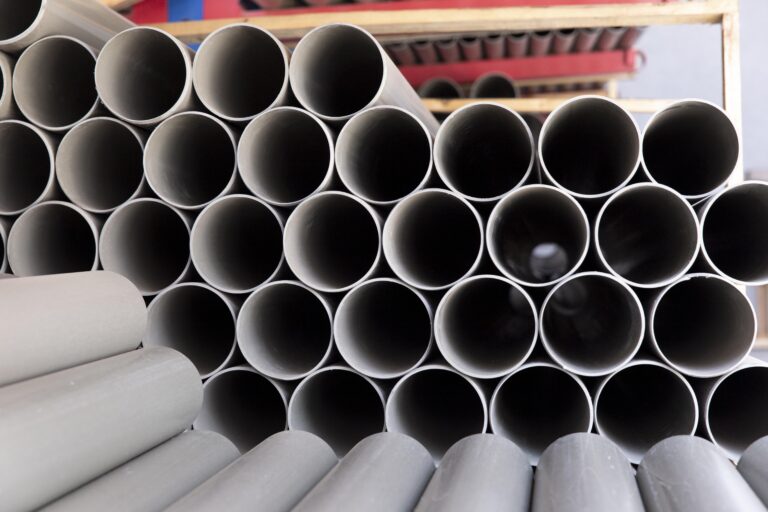
UPVC drainage pipes. Rigid UPVC is the workhorse of underground drainage for homes, buildings and many municipal lines. It does not corrode, its smooth bore resists deposits, and its stiffness holds the line’s shape under soil load. UPVC soil, waste and rainwater (SWR) systems extend from inside the building to the underground run, so one material family can cover the whole drainage path.
Structured-wall and foam-core UPVC pipes. Some UPVC drainage pipes use a layered wall construction to combine stiffness with lower weight. These are graded by stiffness classes, commonly referred to by SN ratings. Rather than memorise classes, match the class to the job with the manufacturer’s guidance – deeper burials and loaded surfaces call for stiffer pipe.
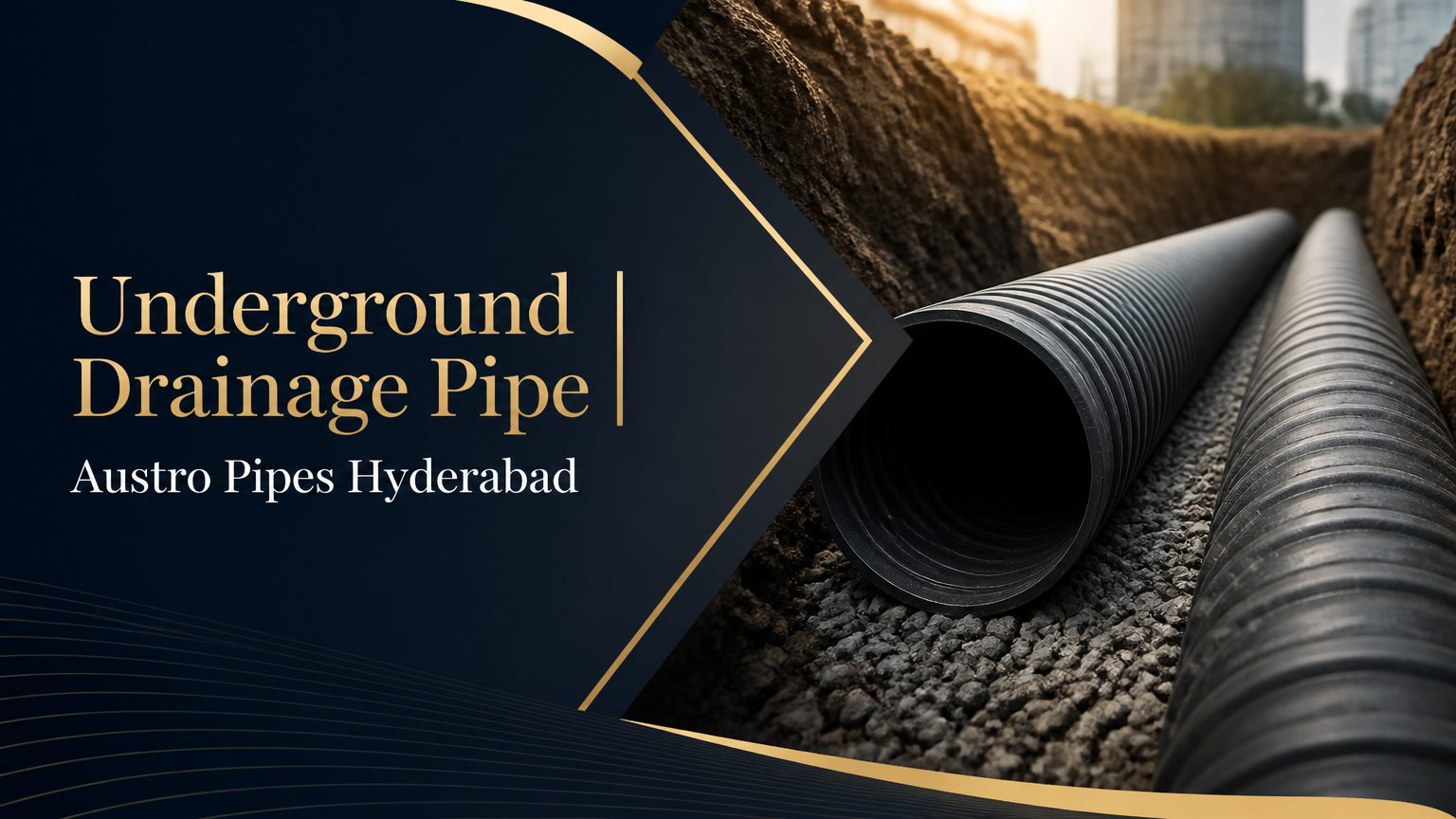
HDPE and double-wall corrugated pipes. HDPE corrugated pipes pair a smooth inner wall with a corrugated outer wall, giving flexibility with high ring stiffness. They come in long lengths with fewer joints, which suits long runs and ground that may shift.
Concrete and older materials. Concrete pipes still appear in large municipal lines, and older properties may have clay or cast iron underground. For new residential and commercial work, plastic systems have largely taken over because they are lighter, joint faster and do not corrode.
Standards and marks that matter
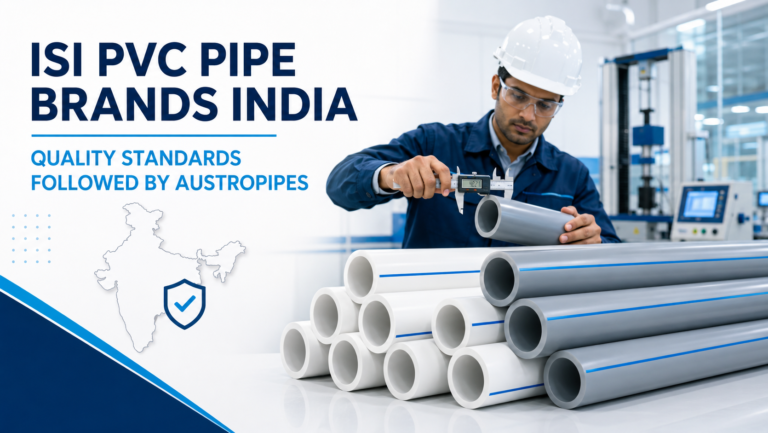
In India, drainage pipes are made to Indian Standards set by the Bureau of Indian Standards, and manufacturers licensed under the scheme mark their pipes with the ISI logo, the standard number and a licence number. Different products – UPVC SWR pipes, structured-wall pipes, corrugated HDPE pipes – are covered by different standards.
For a buyer, the check is simple and general: the pipe should carry the ISI mark with a standard number that matches its intended use, printed on the pipe itself. That mark is the difference between a pipe whose process has been independently assessed and one whose quality is purely a claim. Everything else – brand reputation, dealer assurances, brochure language – sits on top of that foundation, never in place of it.
How to choose: a practical sequence
Start with what the pipe must carry. Soil and waste from a building, rainwater from roofs and paved areas, or both. The volume and the nature of the flow shape the diameter and the system design.
Look at what lies above. A pipe under a garden faces different loads than one under a driveway. Tell the manufacturer or supplier where the line will run and let them recommend the stiffness class for that condition.
Check the soil. Aggressive soils, high water tables and ground that shifts with seasons all affect the choice and the installation method. This is also where joint quality becomes critical, because roots and groundwater exploit weak joints first.
Choose the jointing system deliberately. Push-fit ring joints and solvent-weld joints both work when installed as instructed; what fails joints is poor alignment, dirty sockets and skipped steps. Matched pipes and fittings from one manufacturer keep tolerances consistent along the whole line.
Plan access points. Inspection chambers at changes of direction and gradient, and cleaning access at sensible intervals, turn a buried system into a maintainable one. Plan them before the trench closes, not after the first blockage.
Installation decides the outcome
A good pipe installed badly will fail; an ordinary pipe installed carefully often outlives expectations. The principles are universal even though the details belong in the manufacturer’s instructions for your specific product.
The trench bed should be even and free of sharp stones, with a prepared bedding layer where conditions call for it, so the pipe rests uniformly rather than on point loads. The line needs a consistent slope so flow never ponds in the pipe. Joints should be made exactly as the manufacturer specifies – clean, aligned, and fully home. Backfill goes in layers, compacted appropriately, with care taken not to drop heavy material directly on the pipe. And the installed line should be tested for flow and leaks before the trench is finally closed, because that is the last cheap moment to find a problem.
Follow the manufacturer’s instructions throughout. They know their pipe’s jointing system, its handling limits and its bedding requirements better than any generic guide, including this one.
Signs of a well-made drainage pipe
On the pipe itself, look for clear, permanent printing: the manufacturer’s name, the standard number, the ISI mark, and size and class markings. The pipe’s surface should be smooth and uniform, free of bubbles, cracks and visible wall-thickness variation. Sockets should be cleanly formed, and rubber rings, where used, should seat properly in their grooves. A manufacturer that prints its identity clearly on every length is a manufacturer that expects the pipe to be traced back to them – which is exactly the accountability you want underground.
Keeping the system healthy after installation
An underground drainage line asks for very little, but the little it asks for is worth doing. Keep gratings and gully traps clear of leaves and debris so surface water enters freely instead of ponding. Avoid pouring grease, plaster slurry or construction waste down the line during finishing work – the first year of a building’s life is when drainage lines suffer most, because site waste quietly finds its way into open pipes. If the property has large trees, watch the ground above the line for unusually lush patches or slow settlement, both of which can indicate a leaking joint feeding the roots.
Use the inspection chambers. A slow-draining line almost always announces itself at a chamber before it blocks completely, and clearing a partial blockage through an access point is a small job compared to excavating a buried failure. When you do need to clean the line, use methods suited to plastic pipes and follow the pipe manufacturer’s guidance rather than aggressive improvised tools that can score the bore.
Common mistakes to avoid
- Choosing by price alone. Excavation is the expensive part of any repair; the pipe itself is a small fraction of the cost of getting it wrong.
- Ignoring stiffness class. A pipe that is fine under a lawn may deform under a driveway. Match the class to the load with the manufacturer’s help.
- Mixing pipes and fittings from different makers. Joints are the weak point of every drainage line; matched systems protect them.
- Laying without consistent slope. Ponding inside the pipe leads to deposits, then blockages.
- Skipping the pre-backfill test. Testing the line before closing the trench is the cheapest insurance in the whole job.
- Forgetting access points. A system with no inspection chambers cannot be maintained without excavation.
Frequently asked questions
Which pipe is best for underground drainage?
There is no single best pipe for every job. UPVC suits most building drainage lines; HDPE corrugated pipe suits long runs and shifting ground; the right choice depends on load, soil and layout. Describe the installation to the manufacturer or supplier and follow their recommendation for class and type.
What is an SN rating?
SN ratings are stiffness classes for drainage pipes, describing how well the pipe resists deformation under load. Higher classes suit deeper burial or loaded surfaces. Rather than selecting a class yourself, ask the manufacturer which class your installation needs.
How deep should a drainage pipe be buried?
Burial depth depends on the site, the frost and load conditions, and the system design. Follow the layout your engineer or the manufacturer’s installation guidance specifies for your pipe and soil conditions.
Do underground drainage pipes need the ISI mark?
Pipes made to Indian Standards under a BIS licence carry the ISI mark, which is the most practical quality check available to a buyer. Look for the mark, the standard number and the licence number printed on the pipe.
Can tree roots damage underground drainage pipes?
Roots exploit leaking joints and cracks to enter pipes. Well-made joints, installed as instructed, are the primary defence, along with sensible routing away from large trees where the layout allows it.
How long does an underground drainage pipe last?
Life depends on the material, the installation and the conditions underground. Certified pipe, correctly bedded, correctly jointed and correctly loaded, is the combination that delivers long service – which is why installation discipline matters as much as the pipe you buy.
The bottom line
Underground drainage is a system, not a product. Choose a pipe made to the relevant Indian Standard, at the stiffness class your installation needs, with matched fittings from the same manufacturer. Then install it by the manufacturer’s instructions, test it before the trench closes, and give it inspection access for the future. Do those things and the pipe you never see will never trouble you.
Austro Pipes manufactures UPVC SWR and drainage pipes and fittings for underground and building drainage applications. If you are planning a drainage line for a home, building or project, the Austro team can help you select the right pipe class and fittings for the job.