ISI pvc pipe vs Other Standards: Why Certification Matters in Pipe Quality
Pipe quality rarely gets attention until something goes wrong. A leak behind a tiled wall, a cracked drainage line, or a contaminated water connection can turn a small material choice into a costly repair. That is why an isi pvc pipe is more than a product label; it signals that the pipe has been checked against defined performance expectations.
PVC pipes are used in water supply, irrigation, drainage, borewell casing, conduit protection, and light industrial applications. Because the same pipe may stay hidden inside walls or underground for years, buying only on price can be risky. The right standard helps you judge pressure suitability, wall thickness, impact resistance, and long-term use. An isi pvc pipe gives that decision a clearer foundation.
Beyond the Mark: What Certification Really Means
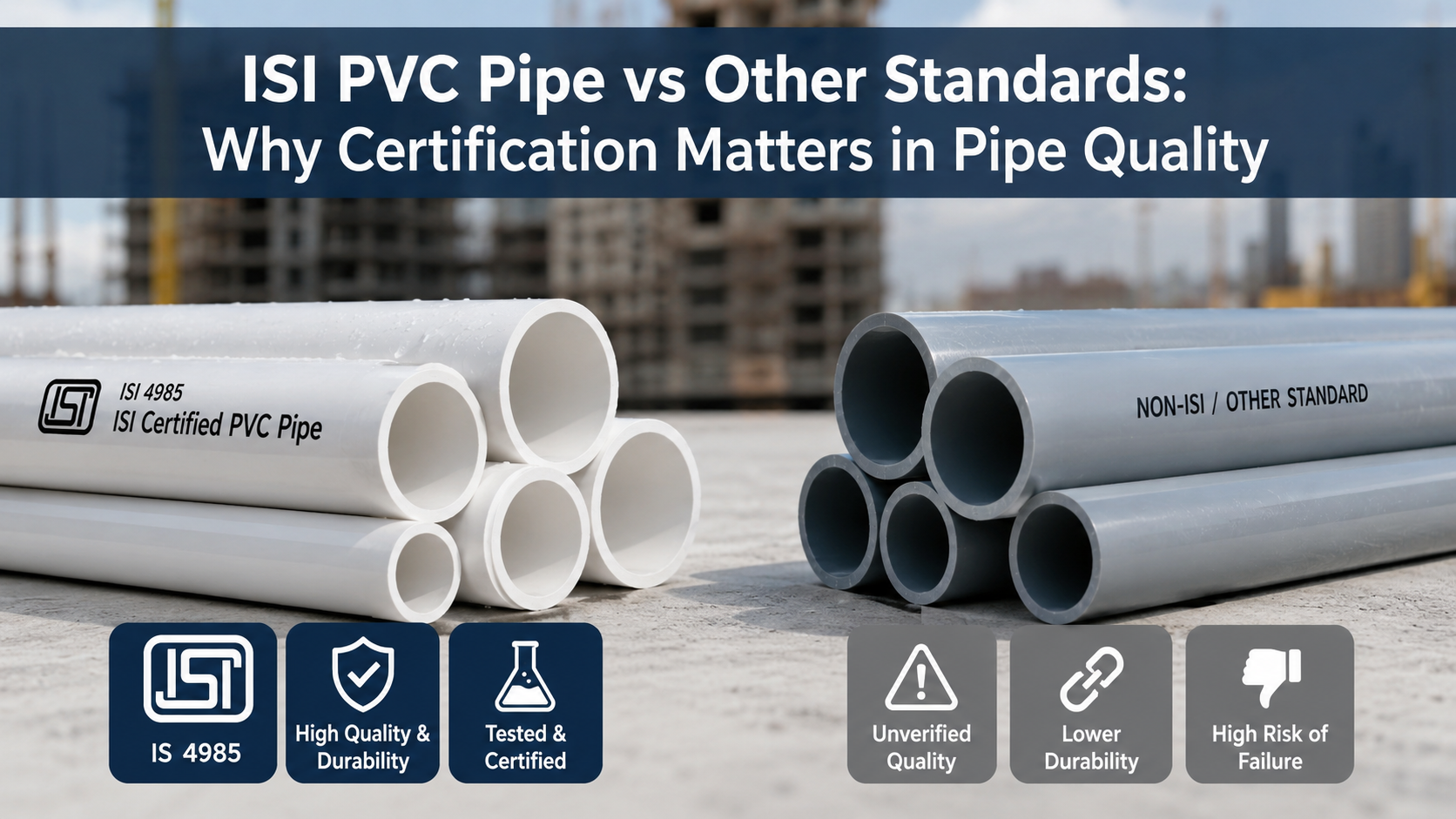
A certification mark is not decoration. It shows that the manufacturer has agreed to produce pipes according to a recognized benchmark and submit products to prescribed testing. In India, BIS certification pipes are associated with checks related to dimensions, material formulation, performance, and consistency. For a deeper explanation, this guide on ISI PVC pipe brands in India and electrical safety standards explains why certification matters for safer product selection. This matters because pipe failure often begins with small compromises that buyers cannot see at the shop counter.
A non-certified pipe may look smooth, rigid, and properly finished. It may even carry convincing claims about strength. But without independent assessment, the buyer has little proof that every batch follows the same standard. An isi pvc pipe reduces that uncertainty because the product is linked to documented compliance rather than only to a sales promise.
Why Pipe Standards Affect Everyday Performance
Pipe standards are technical, but their impact is practical. A pipe used for drinking water must resist pressure, avoid harmful material leaching, and remain stable over years of use. Drainage pipes need different strengths, especially where soil load or external impact is expected. Agricultural pipes must handle field conditions and rough handling.
For buyers, these differences can be confusing. Two pipes may have the same diameter but different pressure ratings, wall thicknesses, or intended applications. That is where quality standards for pvc pipes help. They give manufacturers and buyers a shared language for comparing performance rather than relying on guesswork.
How ISI Compares with Other Pipe Standards
Different markets and projects may refer to ISI, ASTM, ISO, DIN, or other standards. Each system has its own testing methods, classifications, and acceptance requirements. For large projects, consultants may specify a standard based on location, application, or engineering design. For everyday building and plumbing work in India, ISI remains one of the most familiar marks because it connects with local expectations.
An isi pvc pipe is evaluated against Indian specifications relevant to its category. Other standards may be rigorous in their own context, especially where they are designed for different climates, pressure systems, or installation practices. The practical question is not which standard sounds more impressive, but whether the pipe matches the job, the local rules, and the expected service conditions.
Certification Is Not a Substitute for Correct Selection
A certified pipe still needs to be selected correctly. Using a low-pressure pipe in a high-pressure line will create problems, even if the pipe carries a respected mark. Likewise, pipes meant for drainage should not be casually used for potable water lines unless they are approved for that purpose. The best results come when an isi pvc pipe is chosen for the correct pressure class and service condition.
Common Risks with Non-Certified Pipes
The biggest problem with non-certified pipes is inconsistency. One batch may perform reasonably well, while another may have weak walls, poor impact resistance, or uneven dimensions. The difference may not show up during purchase, but it can appear months later as leaks, cracks, joint failures, or reduced flow.
Some low-grade pipes may use poor-quality fillers or recycled material beyond acceptable limits. This can affect strength, surface finish, and durability. In water supply lines, buyers also worry about hygiene and suitability, especially in homes, schools, hospitals, and food-related facilities where safe piping systems are not optional.
A cheaper pipe can become expensive if flooring must be broken, water damage repaired, or an entire line replaced. An isi pvc pipe can help reduce avoidable uncertainty at the buying stage.
What Buyers Should Check Before Purchase
Start with the pipe marking. A genuine certified product should show clear details such as manufacturer name or trademark, standard number, size, pressure class, batch information, and the certification mark where applicable. Faded, irregular, or missing markings should raise questions. When selecting electrical piping, this article on key features to look for in electrical pipes can help buyers check important quality indicators before purchase.
Next, buy from reliable dealers who can provide proper invoices. This makes it easier to trace the product if there is a quality concern. Ask for the intended use as well. A pipe for plumbing, irrigation, casing, or drainage may have a similar appearance but a different design. For product-specific details, buyers can review PVC pipes to compare suitable options for different applications.
Finally, select the proper fittings and glues. Even a strong pipe could be a failure if it is coupled with bad fittings, wrong solvent cement, hasty joining, and improper installation. Certified plumbing materials perform better as a whole system than as individual pieces.
Why Contractors and Homeowners Should Care
For homeowners, certification offers peace of mind. Most people cannot test pipe strength or chemical suitability themselves. They depend on visible markings, dealer credibility, and the advice of professionals. An isi pvc pipe gives non-technical buyers a simple checkpoint while still allowing them to compare price, brand, warranty, and availability. Buyers looking for reliable piping solutions can also explore Austropipes to understand available pipe categories and quality-focused products.
Installation Quality Still Matters
Even the best pipe can fail if handled badly. Pipes should be stored away from excessive heat and direct sunlight for long periods, especially before installation. They should be cut cleanly, supported properly, and joined according to manufacturer guidance. Pressure testing before concealment is sensible for plumbing lines.
Installers should avoid forcing misaligned joints, using mismatched fittings, or burying pipes without suitable bedding in rough soil. An isi pvc pipe offers tested material quality, but installation decides how well that quality performs on site.
Conclusion
Pipe buying may look straightforward, yet the choice carries long-term consequences for comfort, hygiene, repair costs, and building reliability. A well-marked, properly selected, and correctly installed isi pvc pipe gives buyers a practical layer of assurance that a no-name alternative cannot easily match. Certification does not remove the need for good design or skilled installation, but it makes the material decision far less uncertain. For homes, farms, commercial buildings, and public facilities, that assurance is worth taking seriously. Look beyond the lowest quote, ask what the pipe is rated for, and check whether the marking matches the intended use. A little attention at the purchase stage can prevent leaks, disputes, and expensive rework later. In simple terms, better pipes make better projects, and certification helps you choose them with confidence for years ahead, not just at installation time, for everyone involved.
Frequently Asked Questions
1. What does ISI certification mean for PVC pipes?
ISI certification shows that a pipe is made according to defined Indian standards and has undergone required checks for its category. For buyers, an isi pvc pipe offers better confidence in dimensions, pressure rating, material consistency, and suitability for the intended application.
2. Are non-certified PVC pipes always unsafe?
Not always, but they carry more uncertainty. Without recognized certification, it is harder to confirm whether the pipe has consistent wall thickness, suitable raw materials, or reliable pressure performance. Buyers may save initially, yet face higher repair risks later.
3. Can certified PVC pipes be used for all applications?
No. Certification confirms compliance for a specific pipe category, not universal use. A pipe intended for drainage, irrigation, casing, or potable water must be selected according to its rating and approved application. Always match the pipe to the job.
4. How can I identify a genuine certified pipe?
Check for clear, permanent markings showing the standard number, manufacturer details, size, class, and certification mark. Buy from authorized or trusted dealers and keep the invoice. Suspiciously cheap pricing, unclear printing, or missing product details should be treated carefully.
5. Does certification increase the cost of a project?
Certified pipes may cost slightly more than some unverified alternatives, but the difference is often small compared with repair costs. Better consistency, traceability, and performance assurance can reduce leakage risks, site complaints, and premature replacement over the project’s life.