Choosing the Best Water Pipe for Homes, Farms, and Commercial Use
Choosing pipe shapes affects water quality, repair costs, daily reliability, and the life of the whole system. A kitchen, cattle shed, greenhouse, and hotel all ask different things from supply lines, yet they share one concern: the pipe must suit the water, pressure, site conditions, and people using it.
That is why drinking water pipes safe deserve attention from the start. A cheaper product may look fine on the shelf, but the wrong material can create taste issues, leaks, or early failure. The best choice matches safety, durability, pressure capacity, and installation style to real conditions.
What Makes Drinking Water Safe Pipes a Better Choice?
A pipe used for potable supply should not add unwanted smell, color, or contamination to water. It should be approved for drinking water and designed to resist corrosion, scale, and chemical reaction.
For homes, drinking water safe pipes support cooking, bathing, washing produce, and filling storage tanks. For farms, they reduce risk where water may serve workers, livestock areas, processing rooms, or staff facilities. In commercial settings, safety affects customers, employees, inspections, and reputation.
Match Pipe Material to the Application
Start by identifying where the line will run, whether it carries cold or hot water, how much pressure it will face, and whether it will be buried, exposed, or installed inside a building.
For Homes and Apartments
Household plumbing needs clean flow, easy maintenance, and long service life. drinking water safe pipes used indoors should be compatible with fittings, valves, heaters, filters, and storage tanks. In kitchens and bathrooms, the pipe should also handle pressure changes from pumps, faucets, and appliances.
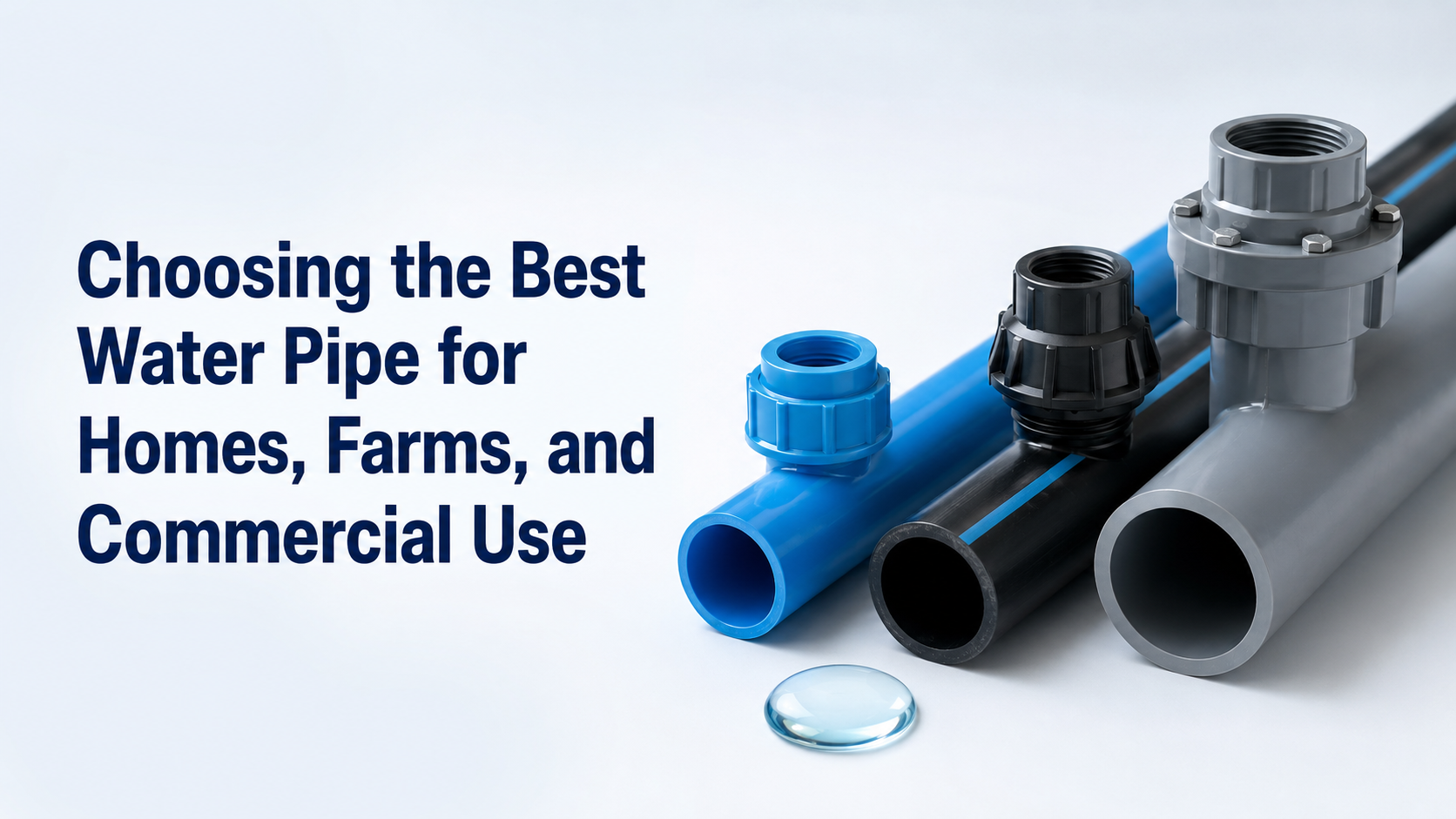
CPVC is often chosen for hot and cold potable lines, while approved PVC may suit certain cold-water applications depending on local rules and product certification. The common comparison of pvc vs cpvc pipes should not be treated as a simple winner-takes-all debate. CPVC generally handles higher temperatures, while PVC is commonly used where heat exposure is not part of the system.
For Farms and Rural Properties
Farm projects often include long runs, uneven terrain, borewell connections, pump rooms, animal areas, and open exposure. drinking water safe pipes may be needed for staff quarters, dairy cleaning zones, farmhouse kitchens, and other potable points.
Keep potable lines clearly separate from irrigation water pipes, chemical dosing lines, and wastewater systems. Marking, valve placement, and simple route maps can prevent confusion later, especially when seasonal workers, plumbers, or maintenance teams change.
For Commercial and Institutional Buildings
Hotels, schools, offices, factories, clinics, and retail spaces need systems that remain dependable under steady use. drinking water safe pipes in these buildings should be chosen with flow demand, inspection requirements, safety routing, and maintenance access in mind. A pipe that works for a small home may be undersized for a multi-floor property.
Selecting from trusted best PVC pipe manufacturers in India can help businesses and institutions install piping systems that deliver consistent performance, safety, and long-term value.
Check Pressure, Temperature, and Flow Before Buying
Pressure is often overlooked. Pumps, overhead tanks, municipal fluctuations, and elevation differences can all affect stress inside a line. A pipe that looks sturdy may still fail if it is used beyond its rating.
Look for pressure rating pipes that match the system’s expected operating pressure with a sensible safety margin. Do not size only for normal conditions; consider pump starts, valve closure, water hammer, and future extensions.
Temperature matters too. Hot lines need material that remains stable under heat. Outdoor lines should handle sunlight or be protected from ultraviolet exposure. Buried lines need resistance to soil movement, moisture, and occasional impact during digging.
Flow is equally practical. If the pipe is too narrow, taps may run weakly and pumps may work harder. If it is oversized without reason, costs rise. A good plumber or project engineer can calculate diameter based on distance, demand, and pump capacity.
Installation Quality Can Make or Break the System
Even drinking water safe pipes can perform badly if installed carelessly. Poor cutting, wrong solvent cement, mismatched fittings, sharp bends, unsupported vertical runs, and rushed pressure testing are common reasons for early leaks. The material gets blamed, while the real issue is workmanship.
Before installation, store pipes away from harsh sun, heavy loads, and contamination. During installation, keep pipe ends clean, follow curing times for joints, and avoid forcing connections into alignment. Supports should be placed at suitable intervals so the line does not sag or vibrate.
After installation, pressure-test the system before covering walls, floors, or trenches. Flush the lines to clear dust, debris, and installation residue. For potable systems, avoid fittings, adhesives, or accessories that are not approved for drinking water contact.
Choosing products from trusted CPVC pipe manufacturers can also help ensure better material quality, consistent performance, and reliable compatibility with approved fittings and installation methods.
Long-Term Value: Think Beyond the Purchase Price
A low upfront price can be tempting, especially for large farm or commercial projects. But the real cost includes labor, fittings, downtime, repairs, water loss, and replacement. drinking water safe pipes from a reliable manufacturer often cost more at the start, yet they reduce uncertainty and help the system age gracefully.
For homeowners, value may mean fewer hidden leaks and better taste. For farms, it may mean dependable supply during peak seasons. For businesses, it may mean fewer complaints and smoother inspections. Keep records after installation, including brand, size, rating, installation date, route, and key valves.
Common Mistakes to Avoid
Do not choose pipes only by color or wall thickness. Similar-looking products can serve very different purposes. The Best PVC Pipe for Home and Agricultural applications should be selected based on water type, pressure requirements, installation location, temperature conditions, and long-term usage needs. Do not mix potable and non-potable lines without clear labeling. Do not assume all plastic pipes are suitable for hot water, direct sunlight, or underground use.
Another mistake is ignoring local codes. Municipal rules, building standards, and inspection requirements may specify materials, jointing methods, or testing procedures. For drinking water safe pipes, compliance is part of protecting health and avoiding costly rework.
Finally, avoid buying from unknown sources without documentation. Low-grade pipes may have uneven wall thickness, poor fitting compatibility, or unclear material composition. Ask for datasheets, warranty terms, and potable-use confirmation before placing a large order.
Conclusion
Choosing the right pipe becomes easier when you stop looking only at price and start thinking about how water will move through the property every day. A home needs clean, reliable supply at every tap. A farm needs sensible separation between potable and utility lines. A commercial building needs durability, access, and compliance because many people depend on the system. Start with the water use, then check material approval, pressure capacity, temperature limits, installation quality, and future maintenance. Keep records, label key lines, and work with an installer who tests before closing walls or trenches. Most of all, choose drinking water safe pipes wherever people will drink, cook, wash produce, or handle food. That single decision supports health, convenience, and peace of mind for years, while also reducing the risk of avoidable repairs, confusing replacements, and expensive downtime later on.
Choose the Best Water Pipe Solution for Your Needs
Looking for reliable and durable water pipes for residential, commercial, or agricultural applications? Austro Pipes offers high-quality piping solutions designed for safe water flow, long service life, and dependable performance. Contact our team today to discuss your requirements and get expert guidance on selecting the right water pipe solution.
Call us: +91 99495 04930
Email: info@austropipes.com
Frequently Asked Questions
1. How do I know if a pipe is suitable for drinking water?
Check the product label, certification, and technical datasheet. The manufacturer should clearly state potable-water suitability, recommended uses, temperature limits, and joining method. For extra confidence, buy from authorized dealers and ask your plumber to confirm compatibility with the whole system.
2. Can the same pipe be used for hot and cold water?
Not always. Some pipes are designed only for cold supply, while others handle both hot and cold lines. Heat can soften or stress the wrong material over time, so check temperature ratings before installation, especially near heaters, kitchens, and bathrooms.
3. What pipe is best for farms with mixed water needs?
Use separate lines for potable supply, crop supply, cleaning, and wastewater. A farm often needs different pipe types for different zones. Drinking points and staff areas should use drinking water safe pipes, while field supply can be planned around distance, pump size, and terrain.
4. Why do pipes fail even when the material is good?
Failures often come from poor installation, wrong fittings, excessive pressure, sunlight exposure, soil movement, or skipped testing. Even a quality pipe needs correct support, clean joints, proper curing, and protection from physical damage to deliver its expected service life.
5. Should I choose pipes myself or ask a professional?
You can shortlist materials and compare specifications yourself, but final selection should involve a qualified plumber, contractor, or engineer. They can assess pressure, routing, flow demand, local code requirements, and installation challenges that are easy to miss during purchase.