DWC Pipes Explained: Uses, Jointing and What to Check Before You Order
Double wall corrugated (DWC) pipe is used for underground drainage, sewerage and cable ducting. It looks different from a plain PVC pipe, with a ribbed outside and a smooth inside, and that shape is the reason it is used in so many below-ground projects. This guide explains what DWC pipe is, where it is used, how it is jointed and what to check before you order.
What Is DWC Pipe?
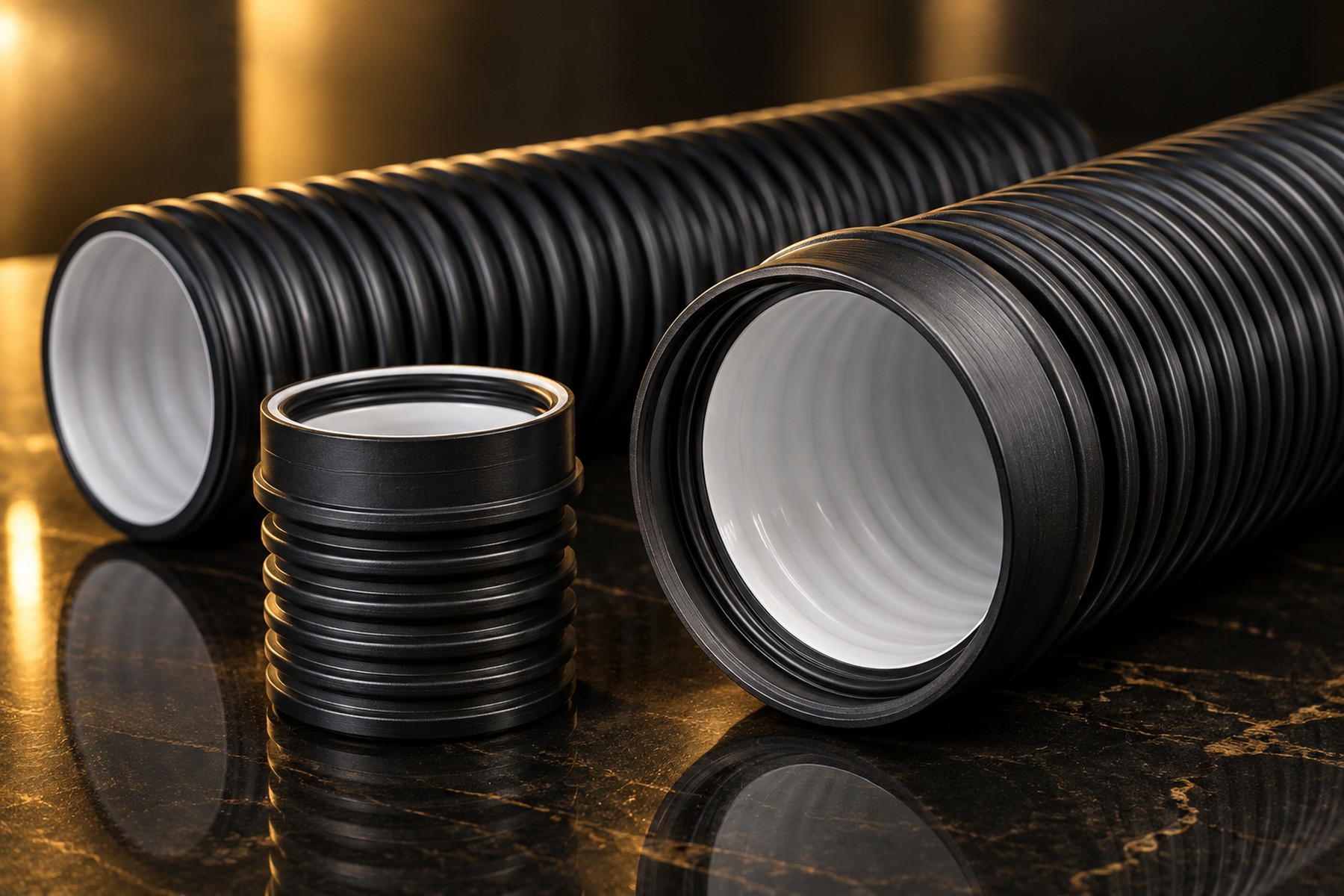
A DWC pipe has two walls joined together. The outer wall is corrugated, which gives the pipe its stiffness. The inner wall is smooth, which helps water and waste move through. The ribs let the pipe carry loads from the soil around it, and the smooth bore helps flow. Different manufacturers make DWC pipes in different sizes and stiffness classes, so always check the exact product details with the supplier.
Where DWC Pipe Is Used
- Underground sewerage and stormwater drainage, which is the most common use.
- Cable ducting for power, telecom and optical fibre lines, often laid along roads and in utility corridors.
- Culverts and road crossings.
- Rainwater harvesting and industrial effluent lines.
- Agricultural drainage.
How the Pipes Are Jointed
Most DWC drainage systems use a socket and spigot joint with a rubber sealing ring. The ring helps keep the joint watertight and can allow a small amount of movement. The manufacturer’s instructions explain how to clean, lubricate and assemble the joint, and how far the pipe must be inserted. Always follow those instructions for the product you use.
Ring Stiffness and Why It Matters
Ring stiffness describes how well a pipe resists the loads on it once it is buried. A pipe under a road with heavy traffic faces different loads from one in a garden. Your engineer or the pipe manufacturer should tell you which stiffness class suits the depth, the soil, the groundwater and the traffic at your site. Do not choose by price alone.
Handling and Storage on Site
Many pipe problems start on site and not in the factory. A few good habits help:
- Store pipes on level ground, with supports so they do not bend or go out of shape.
- Protect the sockets from knocks.
- Do not drag pipes over rough ground. Use slings or wide belts when lifting, not chains.
- Ask the manufacturer how long pipes can be left in direct sunlight, and cover them if needed.
Laying in the Trench
Everything depends on the bedding. Follow your engineer’s drawings and the manufacturer’s instructions. In general:
- Prepare an even bed of suitable material, free of stones and debris.
- Keep the pipe line true so the joints seat properly.
- Clean and assemble the joints as the manufacturer advises, and confirm that each one is fully home.
- Backfill in controlled layers on both sides of the pipe, and keep heavy compaction equipment away from the pipe.
- Carry out the water-tightness or other tests that the project specification asks for, and keep a record.
What to Check Before You Order
- The sizes and stiffness classes available, and which one your engineer has specified.
- The joint type and whether the sealing rings and fittings come with the pipe.
- The test details the manufacturer can share for the product.
- Delivery, storage and handling instructions.
- Support available for specification questions.
Frequently Asked Questions
Can DWC pipes be used for cable ducting?
Yes. DWC pipes are used as ducts for power, telecom and optical fibre cables, as well as for drainage. Check the product details for your use.
How do I choose the right stiffness class?
It depends on the depth of the trench, the soil, groundwater and the traffic loads above the pipe. Your engineer should specify it, and the manufacturer can advise on what they supply.
Can the pipe be left in the sun?
Ask the manufacturer for storage guidance and cover the pipe on site until it is laid.
How are the pipes joined?
Most systems use a socket and spigot joint with a rubber ring. Follow the manufacturer’s instructions for assembly.
Where can I get product details?
For product details and enquiries, you can contact Austro Pipes through the website, austropipes.com. Always confirm specifications for your own project with a qualified plumber, electrician or engineer before you buy or install.